By Jennifer Richards, LMT 2026
When people think about hypermobility or Ehlers-Danlos Syndrome (EDS), they often picture flexible joints like elbows, knees, or fingers. However, connective tissue exists throughout the body—including the mouth.
For individuals with hypermobility, the jaw joint, gums, ligaments, and even tooth structure may be affected. Understanding these connections can help people recognize symptoms and seek appropriate dental care.
The Jaw Joint (TMJ)
The temporomandibular joint (TMJ) connects the jaw to the skull and is one of the most frequently affected joints in hypermobile individuals.
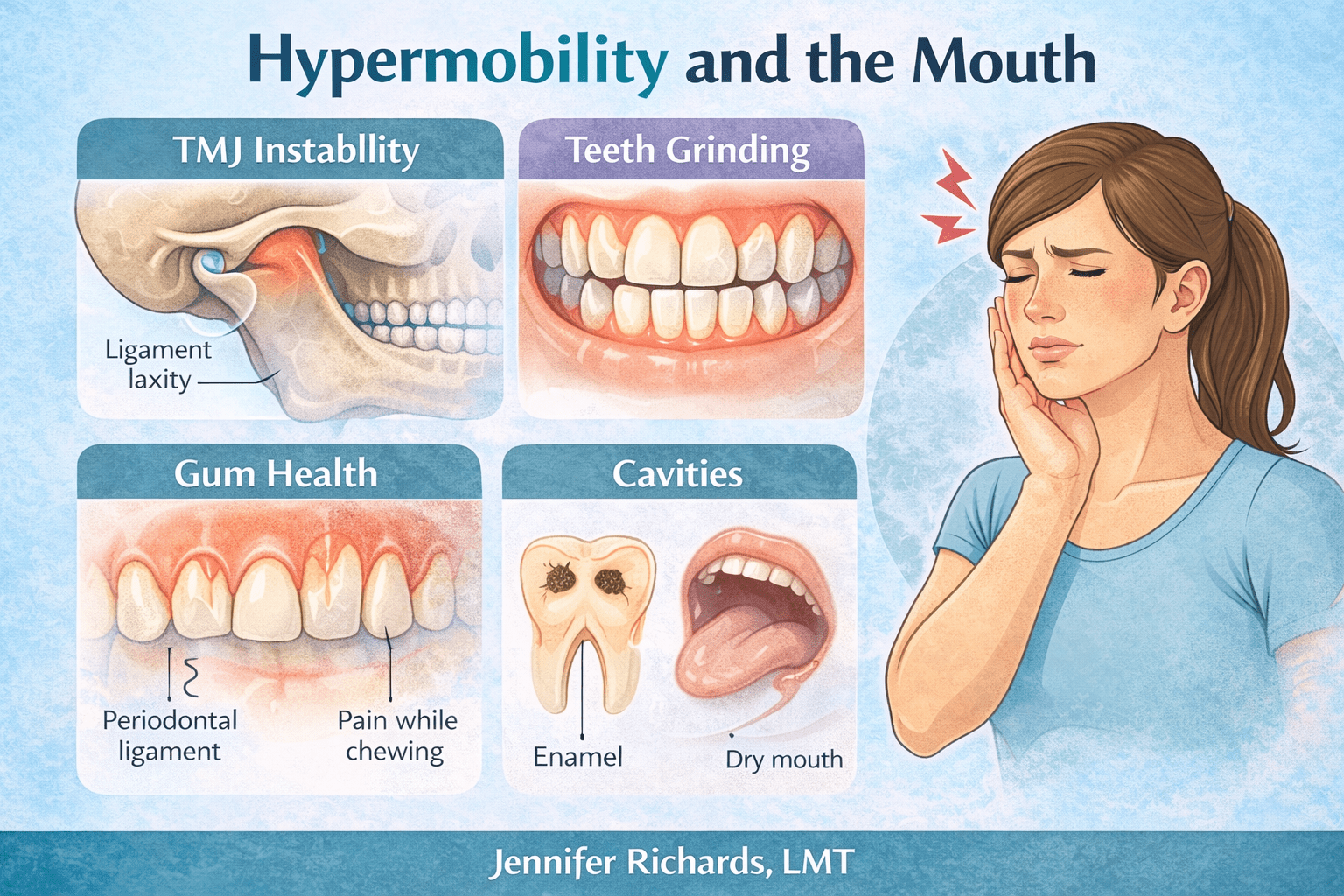
Because ligaments may be more elastic, the jaw joint can become unstable. This may lead to:
Jaw clicking or popping
Jaw locking or catching
Pain while chewing
Difficulty opening the mouth fully
Jaw fatigue when talking or eating
Some individuals may experience partial jaw subluxations, where the joint temporarily slips out of its normal alignment.
Muscles surrounding the jaw often tighten in an attempt to stabilize the joint. This can lead to headaches, facial tension, and neck pain.
Teeth Grinding and Clenching
Jaw instability can also contribute to bruxism, which is grinding or clenching the teeth—often during sleep.
People with hypermobility may grind their teeth because the nervous system is attempting to stabilize the jaw joint. Over time, this can lead to:
worn teeth
tooth sensitivity
cracked enamel
jaw pain
Night guards or dental splints are commonly recommended to protect the teeth and reduce strain on the TMJ.
Gum Health and Periodontal Disease
Connective tissue disorders can also affect the gums and the structures that hold teeth in place.
Some individuals with hypermobility may experience:
fragile or easily bleeding gums
gum recession
early periodontal disease
The ligaments that support teeth (periodontal ligaments) may be more elastic, which can contribute to gum issues or changes in tooth stability.
Maintaining excellent oral hygiene and working with a dentist who understands connective tissue disorders can be very important.
Cavities and Enamel Differences
Some individuals with EDS report frequent cavities or sensitive teeth. In certain types of EDS, enamel development may be slightly altered, which can make teeth more vulnerable to decay or wear.
Dry mouth—sometimes associated with medications or autonomic nervous system issues—can also increase the risk of cavities.
Regular dental checkups and preventative care become especially important.
Other Oral Symptoms
People with hypermobility may also experience:
a high or narrow palate
crowded teeth
frequent mouth ulcers
tongue mobility differences
sensitivity during dental procedures
Some individuals also report needing more anesthetic during dental procedures, though experiences vary.
Why This Matters for Bodywork
The jaw does not function in isolation. The TMJ is closely connected to the muscles of the neck, head, and shoulders.
Jaw tension can contribute to:
headaches
neck pain
upper trapezius tension
facial pain
Massage therapy, when performed appropriately, can sometimes help reduce muscular tension surrounding the jaw, neck, and shoulders. However, because the TMJ can be unstable in hypermobile individuals, gentle techniques and awareness of joint stability are important.
Awareness Helps
Hypermobility affects connective tissue throughout the body, including areas people might not immediately think about—like the mouth.
Recognizing these connections can help individuals better understand their symptoms and seek appropriate care from dental and healthcare professionals.
Awareness also helps people advocate for themselves when receiving dental work or bodywork, ensuring providers understand the unique needs of hypermobile patients.
Educational Disclaimer
Hypermobility and Ehlers-Danlos Syndrome exist on a spectrum. Every individual experiences connective tissue disorders differently, and not everyone will experience the symptoms or challenges discussed in this article.
The information shared here is intended for educational and awareness purposes only. It is not intended to diagnose, treat, or replace medical advice from a qualified healthcare professional.
Massage therapists do not diagnose medical conditions. If you are experiencing pain, instability, or symptoms related to hypermobility or connective tissue disorders, please consult an appropriate healthcare provider such as your physician, physical therapist, or specialist.
Invitation for Conversation
Living with a hypermobile body can sometimes feel confusing or isolating. Education helps us better understand our bodies and advocate for the care we need.
If you found this article helpful or have personal experiences with hypermobility and bodywork, I invite you to share your thoughts or questions. Conversations like these help build awareness and support for those navigating connective tissue disorders.
— Jennifer Richards, LMT
For more information, please read this: Ehlers-Danlos Society

 Tranquil Touch Wellness: Jennifer Richards, LMT