Hypermobility and Connective Tissue Disorders
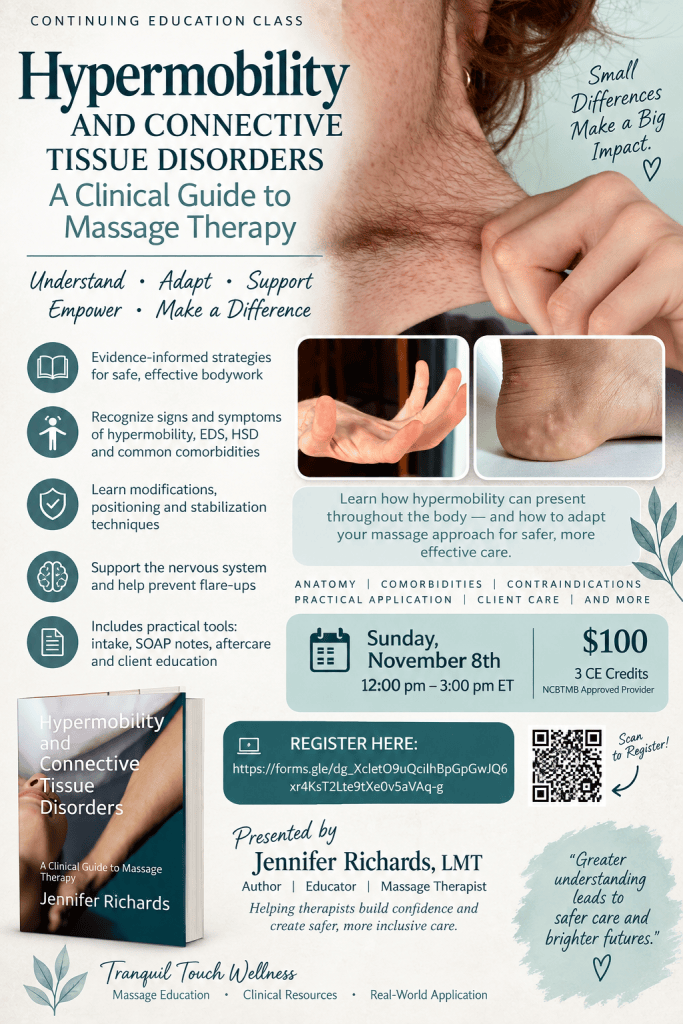
Sunday, November 8th, 2026
12pm ET – 3pm ET
Tranquil Touch Wellness: Jennifer Richards, LMT
Massage Therapy Articles + CE Support for Lifelong Learning.
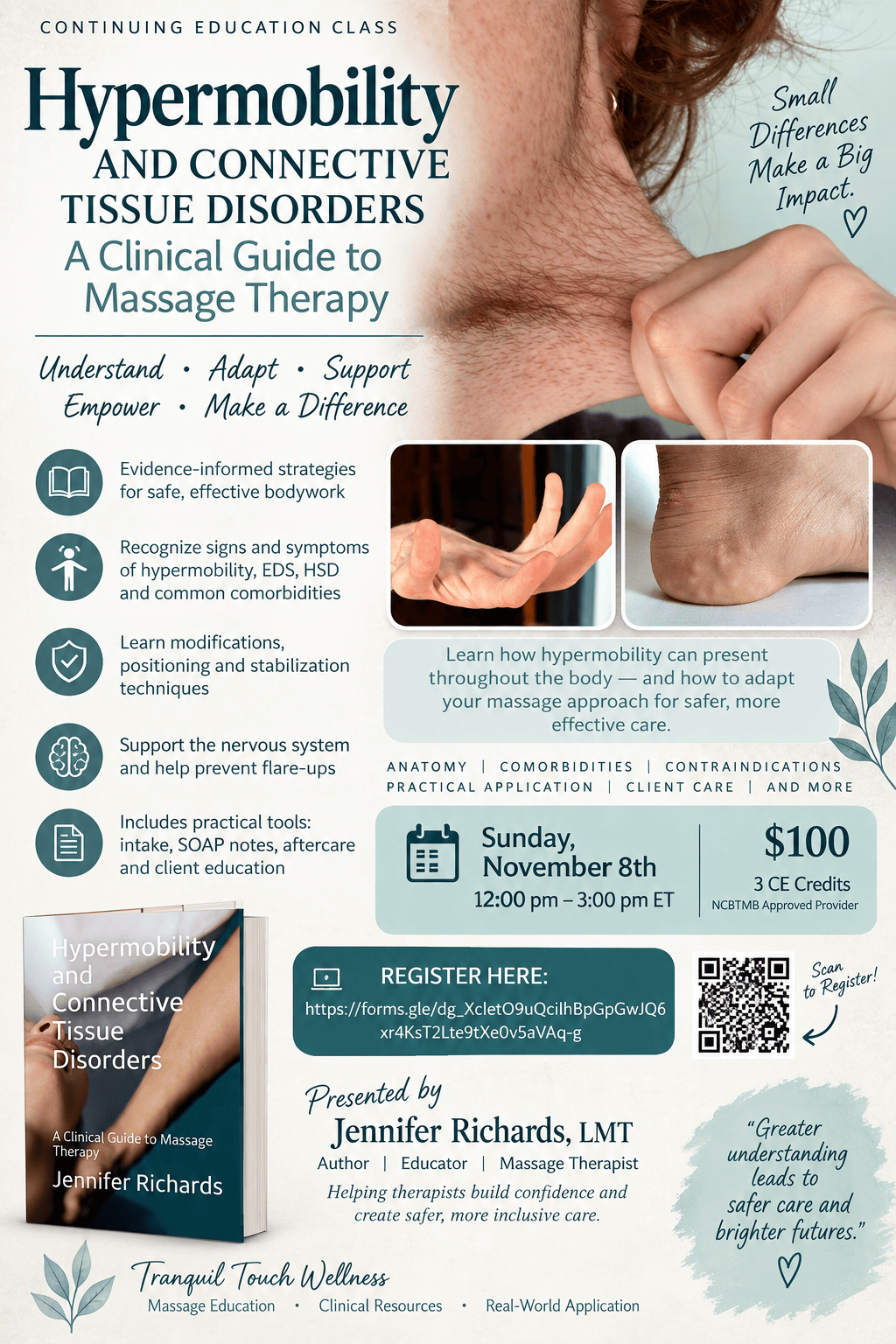
Hypermobility and Connective Tissue Disorders
Sunday, November 8th, 2026
12pm ET – 3pm ET
By Jennifer Richards, LMT
A client with hypermobility may arrive for a massage with a surprisingly long medication list.
One medication may be for pain. Another may control heart rate. Another raises blood pressure. One may calm histamine-related symptoms. Another may address gastrointestinal problems. And increasingly, some clients may be taking medications such as GLP-1 receptor agonists or low-dose naltrexone (LDN).
This doesn’t mean there is a standard “hypermobility medication regimen.”
There isn’t.
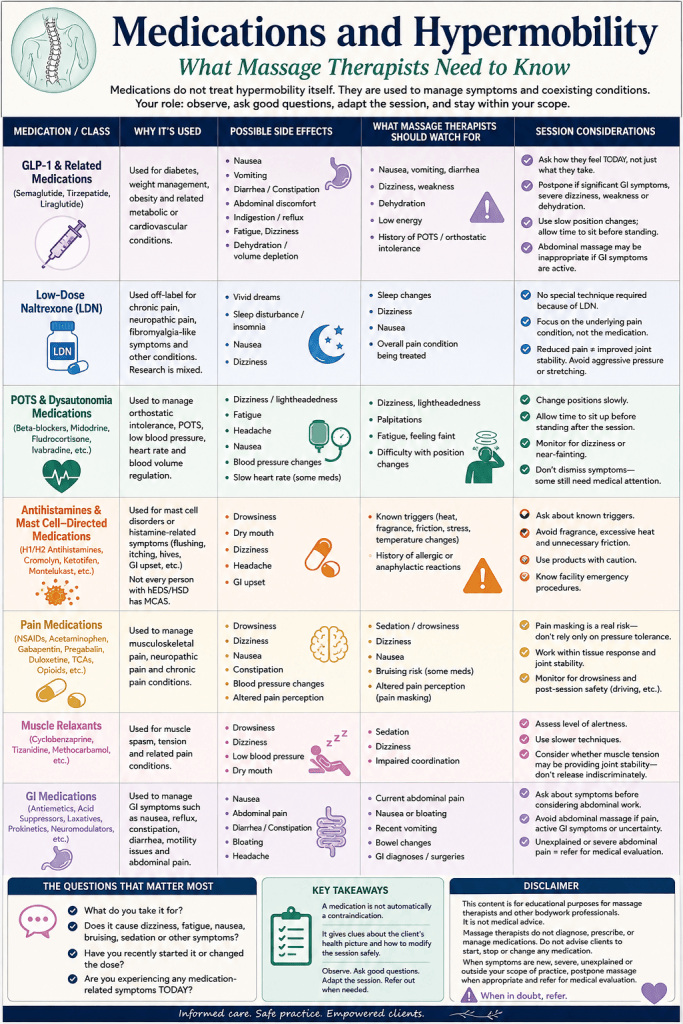
Hypermobile Ehlers-Danlos syndrome (hEDS) and hypermobility spectrum disorders (HSD) are connective-tissue conditions, and medication does not make the connective tissue less hypermobile. Instead, medications are generally used to manage symptoms and coexisting conditions. These can include chronic pain, neuropathic pain, dysautonomia/POTS, gastrointestinal dysfunction and—in appropriately diagnosed patients—mast-cell disorders. (NCBI)
For massage therapists, the goal isn’t to decide whether a medication is appropriate.
Our job is to understand how that medication—or the condition it is treating—might affect the massage session.
Examples include:
GLP-1 receptor agonists, and related medications such as tirzepatide, are used for conditions including diabetes, obesity and weight management. Some semaglutide formulations also have cardiovascular and other approved indications. (FDA Access Data)
They are not treatments for hypermobility itself.
However, massage therapists are increasingly likely to encounter clients taking them.
These medications affect the gastrointestinal system and can delay gastric emptying.
Common adverse effects of semaglutide include:
Significant vomiting or diarrhea can also contribute to dehydration and volume depletion. (FDA Access Data)
That becomes particularly interesting in a hypermobile client who already experiences orthostatic intolerance or POTS.
Ask how the client feels today, not merely whether they take a GLP-1.
A client experiencing significant nausea, vomiting, diarrhea, dizziness, weakness or dehydration is probably not an ideal candidate for a routine massage that day.
Be cautious with rapid position changes. Allow the client to sit before standing after the session, particularly if they already experience orthostatic symptoms.
Abdominal massage may also be inappropriate or uncomfortable in a client experiencing significant GI symptoms, bloating, constipation or abdominal pain.
A massage therapist should not automatically attribute new or severe abdominal symptoms to a medication. Severe or unusual symptoms warrant medical evaluation rather than massage.
LDN has become increasingly discussed in chronic-pain communities.
Naltrexone was originally developed and approved at substantially higher doses for opioid and alcohol use disorders. “Low-dose naltrexone” refers to much smaller doses used off-label for conditions involving chronic or centralized pain.
Proposed mechanisms include effects on opioid receptors and neuroimmune signaling.
Research remains mixed.
Some reviews have reported promising results for certain chronic pain conditions, while a 2024 systematic review of randomized trials found insufficient evidence that LDN meaningfully reduced chronic pain across the conditions studied. More recent reviews continue to describe the evidence as limited and heterogeneous. (PubMed Central (PMC))
In other words:
LDN is interesting. It is not a proven treatment for hEDS or HSD.
LDN is generally reported as well tolerated, but adverse effects may include:
There is no special massage technique required simply because someone takes LDN.
Instead, determine why the client takes it.
If the answer is chronic widespread pain, fibromyalgia-like symptoms or neuropathic pain, that underlying pain condition may be much more relevant to treatment planning than the medication itself.
Remember that reduced pain does not equal improved joint stability.
A client who feels better may tolerate more pressure—but that does not mean deeper pressure, stretching or aggressive joint mobilization has suddenly become appropriate.
Some people with hEDS/HSD also have orthostatic intolerance or POTS.
Medications that may be prescribed include:
GeneReviews specifically notes these among pharmacologic approaches sometimes used for POTS and neurally mediated hypotension in hEDS. (NCBI)
These medications may be used to influence heart rate, blood pressure, blood volume or vascular tone.
This is where positioning becomes especially important.
Watch for:
Never rush a dysautonomic client off the table.
After a supine or prone session, allow the client time to sit upright and assess how they feel before standing.
If dizziness develops, don’t assume, “That’s just their POTS.”
Symptoms still deserve attention.
Some hypermobile clients are diagnosed with mast-cell disorders or are being evaluated for symptoms such as flushing, itching, hives and episodic multisystem reactions.
It is important not to assume that every person with hEDS/HSD has MCAS. Current expert guidance recognizes overlapping symptoms while emphasizing that routine testing for MCAS in everyone with hEDS/HSD is not supported by existing evidence. (PubMed)
When mast-cell disease is appropriately diagnosed, treatment may include:
(NCBI)
Ask about known triggers.
For some clients, triggers can include:
Mechanical stimuli such as friction and temperature changes are specifically recognized among potential triggers in patients with mast-cell disorders. (PubMed)
That makes seemingly innocent additions—essential oils, strongly scented creams, heat packs or vigorous friction—worth discussing before using them.
If a client has a history of serious allergic reactions, the therapist should know the facility’s emergency procedures and remain within professional scope regarding emergency response.
Chronic musculoskeletal pain is common in hEDS/HSD.
Clients may use medications including:
There is no single recommended medication for musculoskeletal pain in hypermobility. Treatment is individualized, and evidence for several commonly used medications specifically in hEDS remains limited or mixed. (NCBI)
Pain is information.
If medication substantially decreases a client’s perception of pain, the therapist cannot assume the tissues can tolerate greater pressure.
This is especially important with hypermobility.
The structural vulnerability hasn’t disappeared simply because pain perception has changed.
Don’t chase the client’s pressure tolerance.
Work according to tissue response, joint stability, medical history and the client’s response during and after treatment.
Some hypermobile clients develop significant muscular tension.
That tension isn’t always the enemy.
Muscles may be working overtime to stabilize joints that receive less passive stability from connective tissues.
Muscle relaxants may occasionally be prescribed when muscle tension, spasm or pain becomes problematic. (PubMed Central (PMC))
Depending upon the medication, clients may experience sedation, dizziness or impaired coordination.
This raises an important question:
Do we really want to aggressively release every tight muscle we find?
Not necessarily.
In a hypermobile body, muscular guarding may sometimes be contributing to functional stability.
Massage should reduce unnecessary tension without indiscriminately removing every stabilizing strategy the body has developed.
A client may take an antidepressant for reasons other than depression.
SNRIs and tricyclic antidepressants, for example, may be used as part of treatment for neuropathic or chronic pain. Gabapentin and similar medications may also be used for neuropathic symptoms. (NCBI)
Possible effects relevant to massage can include:
Again, the medication name alone doesn’t tell the whole story.
Ask:
“What are you taking this medication for, and does it cause any side effects that affect you today?”
That question can be much more useful than simply recording the medication on an intake form.
GI symptoms can be significant in some people with hEDS/HSD.
Depending on the diagnosis, clients may use medications for:
A 2025 American Gastroenterological Association expert review discusses numerous treatment options used according to the specific GI disorder, including antiemetics, prokinetic medications, acid suppression, constipation therapies and neuromodulators. (PubMed)
Don’t assume abdominal massage is appropriate simply because someone is constipated.
Ask about:
Unexplained or severe abdominal pain belongs in a healthcare provider’s office—not underneath a massage therapist’s hands.
Massage intake forms frequently contain a box labeled:
Medications: __________
The client writes down six medications.
And that’s where the conversation ends.
It shouldn’t.
A more useful conversation is:
What do you take it for?
Does it cause dizziness, fatigue, nausea, bruising, sedation or other symptoms?
Have you recently started it or changed the dose?
Are you experiencing any medication-related symptoms today?
Those answers may actually change the massage session.
Taking medication does not automatically mean someone cannot receive massage.
It means the therapist needs context.
For the massage therapist, medications may provide clues about:
The goal isn’t pharmacology.
It’s clinical reasoning within our scope of practice.
Hypermobility rarely walks into our treatment room as simply “loose joints.”
The client may be managing pain, fatigue, gastrointestinal symptoms, autonomic dysfunction, allergic or mast-cell-related symptoms, headaches, sleep problems and other health concerns simultaneously.
Their medication list can give us a glimpse into that bigger picture.
But medications also remind us of one of the most important boundaries in massage therapy:
We don’t prescribe them.
We don’t tell clients to discontinue them.
We don’t change doses.
We don’t tell clients that a medication is causing a symptom.
We observe.
We ask good questions.
We modify the session when appropriate.
And when something falls outside our scope, we refer the client back to the healthcare professional managing their care.
That isn’t being overly cautious.
That’s practicing informed, responsible massage therapy.
This article is intended for educational purposes for massage therapists and other bodywork professionals. It is not medical advice and is not intended to diagnose, treat, prescribe for or manage any medical condition.
Medication selection, dosing, interactions, discontinuation and management are outside the scope of massage therapy and should be handled by an appropriately licensed healthcare professional.
Medication side effects vary by drug, dosage, indication, other medications, medical conditions and individual response. Massage therapists should not advise clients to begin, stop or alter any prescription or over-the-counter medication.
A client’s diagnosis or medication list should never replace individualized assessment. When symptoms are new, severe, unexplained or outside the therapist’s scope of practice, massage should be postponed when appropriate and the client referred for medical evaluation.

By Jennifer Richards, LMT
This article is intended for educational purposes only and does not constitute medical advice, diagnosis, or treatment. Massage therapists do not diagnose hypermobile Ehlers-Danlos syndrome (hEDS), Hypermobility Spectrum Disorder (HSD), or other medical conditions. If you suspect a connective tissue disorder, seek evaluation from an appropriately qualified healthcare professional. Always work within your professional scope of practice and consult your healthcare provider before beginning any new exercise or rehabilitation program.
Imagine knowing something isn’t right with your body but spending years searching for answers.
Unfortunately, this is the reality for many people with symptomatic hypermobility. Some communities have no specialists familiar with hypermobile Ehlers-Danlos syndrome (hEDS) or Hypermobility Spectrum Disorder (HSD). Others face wait times measured in months—or even years. Many patients are told that they are “just flexible,” “just anxious,” or that their symptoms are unrelated.
As massage therapists, we are often among the first healthcare professionals to notice recurring patterns:
Recognizing these patterns is not diagnosing. It is recognizing when a client may benefit from further evaluation while providing safe, supportive care.
One of the biggest misconceptions is that hypermobility itself is the problem.
In reality, excessive joint motion is often one feature of a larger condition.
For some people, hypermobility causes no symptoms and requires no treatment. For others, it may occur alongside connective tissue disorders such as hEDS or HSD, where differences in connective tissue may contribute to joint instability, chronic pain, fatigue, autonomic dysfunction, gastrointestinal symptoms, and many other systemic concerns.
Rather than trying to “take away” flexibility, the goal becomes helping the individual develop better stability, movement quality, and confidence.

Many rehabilitation programs are designed for bodies with typical connective tissue integrity.
Hypermobile bodies often behave differently.
Some clients faithfully perform strengthening exercises only to experience:
This doesn’t necessarily mean exercise is harmful.
It often means the body requires a different approach.
Rehabilitation for hypermobility is frequently most successful when it emphasizes gradual progression, motor control, proprioception, and nervous system regulation rather than simply increasing strength or flexibility.
A body living in chronic pain or instability often exists in a heightened state of alertness.
When the nervous system remains activated, muscles frequently compensate by tightening in an attempt to stabilize loose joints. Unfortunately, this protective strategy may also increase pain and fatigue.
Helping the nervous system feel safe can be just as important as strengthening muscles.
Helpful practices may include:
The goal is not simply relaxation—it is improving the body’s ability to shift between states of activation and recovery.
Rather than asking, “How strong can I become?”
A better question is:
“How well can I control my movement?”
Many rehabilitation specialists begin with:
Small improvements practiced consistently often produce greater long-term results than aggressive strengthening programs that repeatedly trigger symptom flares.
One of the hardest lessons for many hypermobile individuals is learning that “more” is not always “better.”
Progress often looks like:
Some researchers describe this as staying within an individual’s “energy envelope”—reducing the likelihood of symptom exacerbation while gradually improving function.
When local expertise is unavailable, reputable educators can provide valuable information. These resources should complement—not replace—individualized medical care.
Jeannie Di Bon is a movement therapist and founder of The Zebra Club. Her work emphasizes gentle movement, proprioception, breathing, nervous system regulation, and gradually improving joint stability. Her educational approach is particularly accessible for beginners and those recovering from repeated setbacks.
Physiotherapist Will Harlow focuses on chronic pain, fibromyalgia, hypermobility, pacing, nervous system education, and progressive strengthening. While not exclusively focused on EDS, many individuals with hypermobility appreciate his practical explanations of pain science and rehabilitation.
Physical therapist Michelle Koehler specializes in hypermobility rehabilitation. Her educational content focuses on movement quality, stabilization, exercise progression, and helping individuals understand why conventional rehabilitation sometimes fails in hypermobile populations.
Jess Janneman provides education on connective tissue disorders, rehabilitation principles, exercise modification, pain science, and functional movement. Her work helps bridge the gap between current research and practical application.
Many clients find it helpful to build a daily nervous system practice.
Popular options include:
Meditation
Breathing
Sleep
The best app is often the one a person will actually use consistently.
Depending on the individual’s medical history and healthcare team’s recommendations:
Massage therapists cannot diagnose connective tissue disorders.
We can, however:
Sometimes the greatest gift we offer is helping someone feel heard after years of being dismissed.
Many clients spend years waiting for answers. During that time, they deserve compassionate care, thoughtful movement education, and practitioners willing to recognize that flexibility is only one piece of a much larger puzzle.
As massage therapists, we cannot replace physicians, physical therapists, or other specialists. But we can become knowledgeable members of an interdisciplinary team—supporting our clients safely while encouraging evidence-informed care.
Helping someone feel safer in their own body may not sound dramatic, but for many people living with symptomatic hypermobility, it can be life-changing.

By Jennifer Richards, LMT, NCBTMB Approved Provider
This article is intended for educational purposes only and should not be interpreted as medical advice. It summarizes current scientific literature regarding hypermobile Ehlers-Danlos syndrome (hEDS), hypermobility spectrum disorders (HSD), childbirth, and pelvic floor dysfunction, while also presenting clearly identified hypotheses based on clinical observations and personal experience.
Where evidence exists, it is cited. Where evidence is limited, speculation is identified as such.
When we think about childbirth, we often focus on labor and delivery. Yet birth represents one of the greatest physiological challenges the human body will ever experience.
Successful childbirth requires coordinated function of:
Recovery requires all of these systems to heal—not simply the uterus.

Research consistently demonstrates that individuals with hypermobile Ehlers-Danlos syndrome (hEDS) and hypermobility spectrum disorders (HSD) experience higher rates of:
Collagen abnormalities likely contribute to decreased tensile strength of ligaments, fascia, skin, and pelvic support structures.
Perineal tears are common during vaginal delivery.
However, connective tissue disorders raise important questions:
Could tissues be more susceptible to:
Although definitive research is limited, these questions are biologically plausible given what we know about collagen disorders.
A fistula is an abnormal connection between two organs, most commonly:
These injuries can result in:
In high-income countries, fistulas most commonly occur after severe obstetric trauma, difficult deliveries, or surgical complications.
At present, there is insufficient evidence to conclude that hEDS directly increases the risk of obstetric fistulas.
However, there are strong biological reasons to investigate whether connective tissue disorders may contribute to:
This represents an important gap in current research.
Labor is not solely mechanical.
The autonomic nervous system regulates:
Many individuals with hEDS experience dysautonomia, including POTS.
Whether autonomic dysfunction influences tissue recovery after childbirth remains largely unknown but deserves further investigation.
The following section reflects my observations and should be interpreted as hypothesis rather than established fact.
During my career as a massage therapist, educator, and someone living with hypermobility, I have repeatedly encountered stories involving:
My own childbirth experience included a severe tear, profound exhaustion, and an altered level of awareness during labor. Family members and close friends have also experienced significant childbirth-related pelvic injuries, including fistulas. These personal experiences do not establish a causal relationship, but they have prompted me to ask an important scientific question:
Could connective tissue disorders predispose some individuals not only to musculoskeletal complications, but also to more severe obstetric tissue injury and impaired postpartum healing?
Current research does not yet provide a definitive answer.
I hope future studies will.
Recognition of connective tissue disorders continues to grow.
Understanding how collagen disorders influence pregnancy and childbirth could improve:
Many women have been told their postpartum symptoms are simply “part of having children.”
For some, they may represent the lasting consequences of an underlying connective tissue disorder.
Science advances because clinicians, researchers, and patients ask thoughtful questions.
Not every observation becomes a proven theory.
But every important discovery begins with someone asking:
“Could there be a connection we have not yet recognized?”
I believe childbirth in connective tissue disorders deserves that question.
“I think I’m having a flare.”
If you spend time in communities for Ehlers-Danlos syndrome (EDS), hypermobility spectrum disorders (HSD), lupus, rheumatoid arthritis (RA), multiple sclerosis (MS), mast cell activation syndrome (MCAS), or myalgic encephalomyelitis/chronic fatigue syndrome (ME/CFS), you’ll hear that phrase often.
But what exactly is a flare?
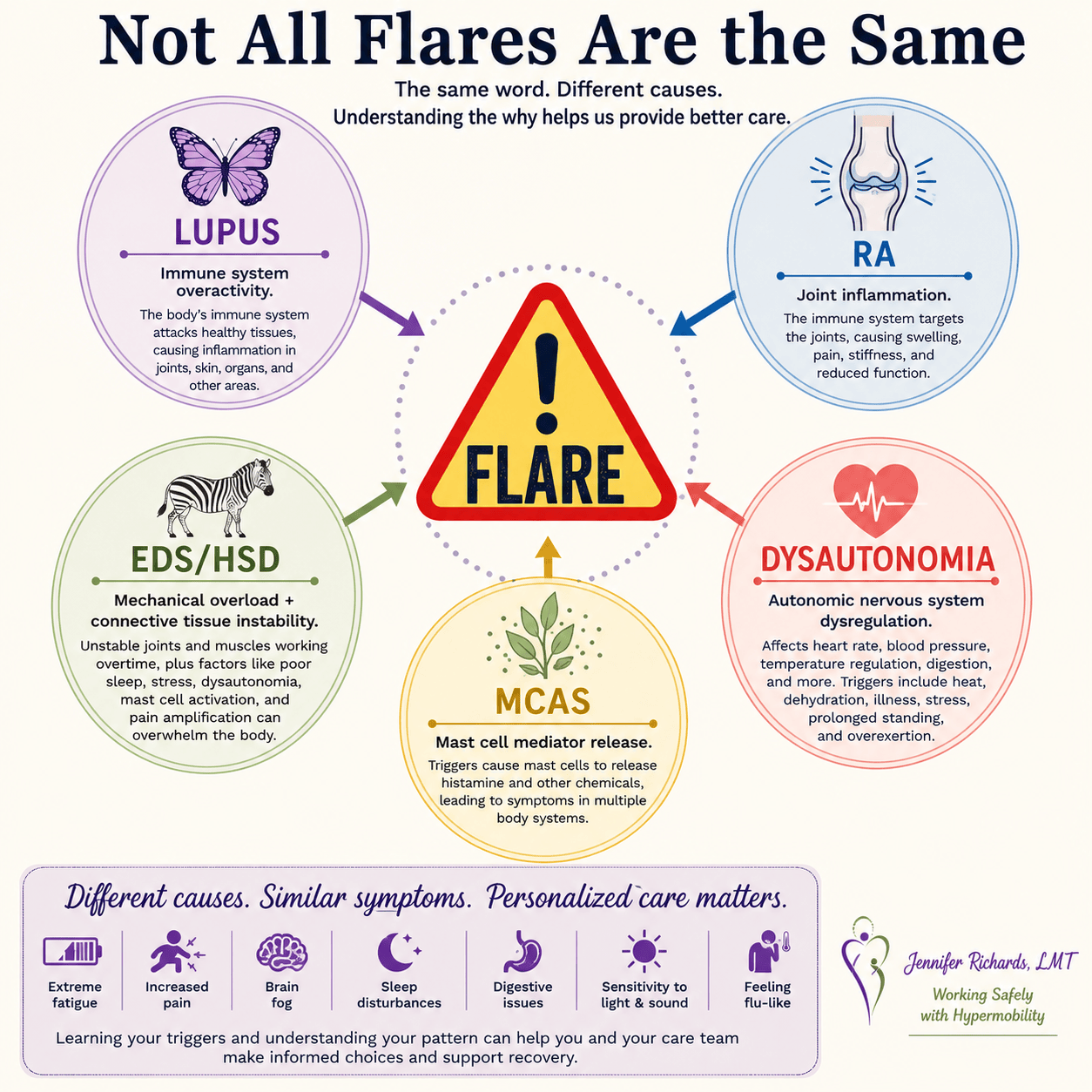
Interestingly, a flare is not a diagnosis. It is a temporary worsening of symptoms beyond a person’s usual baseline.
The important question isn’t whether someone is flaring.
The important question is why.
Our bodies constantly adapt to physical, emotional, and environmental stress.
Usually they do this remarkably well.
Sometimes, however, those systems become overwhelmed. When that happens, symptoms can temporarily intensify.
This period of increased symptoms is what we call a flare.
Think of it like driving a car up a steep mountain.
The engine may run perfectly under normal conditions. But if you keep adding weight, increase the incline, and turn on the air conditioner on a hot day, eventually the engine begins to struggle.
Different medical conditions have different “engines,” but they can all become overloaded.
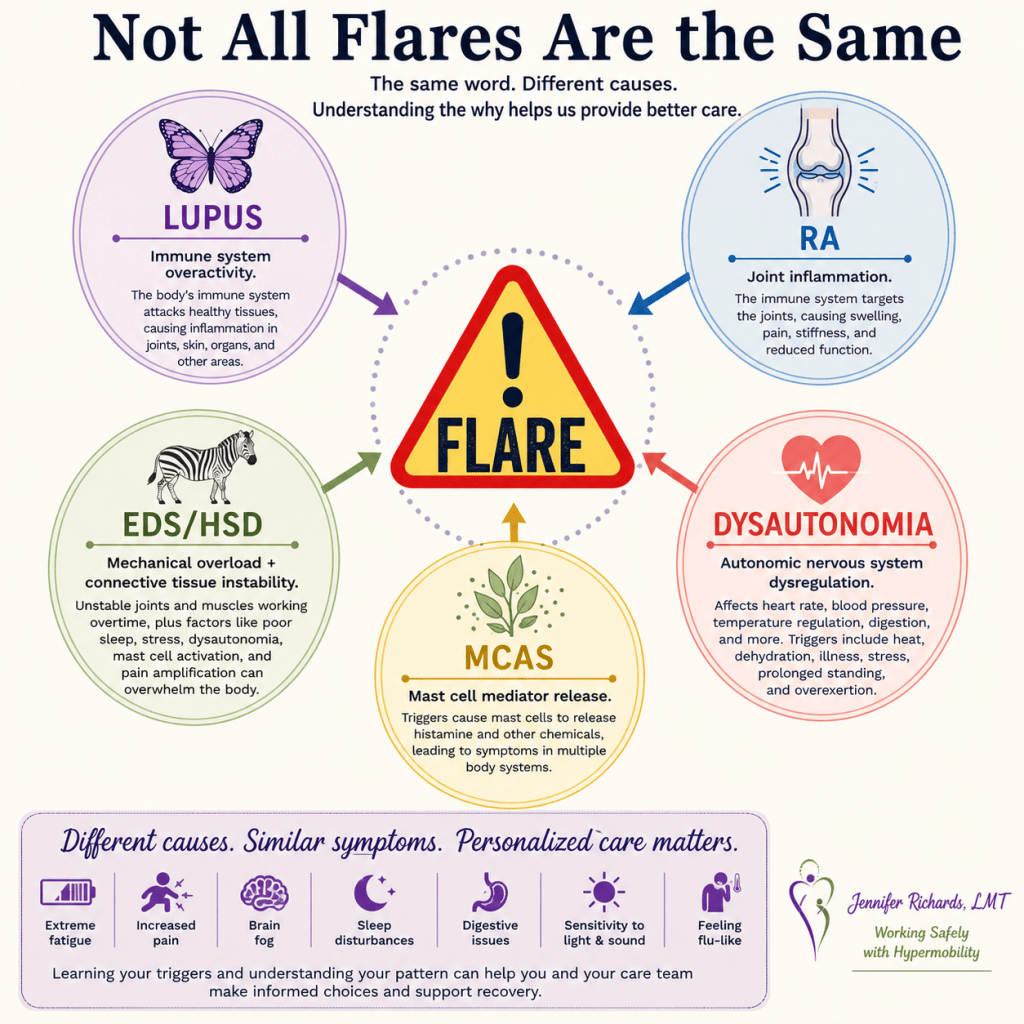
In lupus, the immune system becomes overactive and mistakenly attacks healthy tissues.
During a flare, inflammation may increase throughout the body, affecting joints, skin, kidneys, lungs, the heart, or other organs.
Symptoms may include:
Because lupus is an autoimmune disease, treatment often focuses on reducing inflammation and calming the immune response under the guidance of a physician.
RA flares are also driven by immune system activity, but the inflammation primarily targets the joints.
People often experience:
Again, the underlying issue is immune-mediated inflammation.
This is where things become especially interesting.
People with EDS or HSD absolutely experience flares.
However, current research suggests these flares are often not caused by autoimmune inflammation.
Instead, they may result from a combination of factors, including:
Instead of one system malfunctioning, several body systems may become overwhelmed at the same time.
The autonomic nervous system controls many automatic functions including:
When that system becomes dysregulated, symptoms may suddenly worsen.
People often describe:
These episodes may be triggered by heat, dehydration, illness, prolonged standing, or emotional stress.
For individuals with MCAS, certain triggers may activate mast cells, releasing chemicals such as histamine.
Symptoms may include:
For some people with hypermobility, dysautonomia and mast cell activation appear to overlap, although researchers are still working to better understand these relationships.
Here’s the fascinating part.
Whether the problem begins in the immune system, connective tissue, autonomic nervous system, or mast cells, the body has a limited number of ways to signal distress.
Many flares share common symptoms:
The symptoms overlap because the immune, nervous, endocrine, and pain-processing systems constantly communicate with one another.
While triggers vary between individuals, many people notice patterns such as:
Learning your own triggers is often one of the most valuable parts of long-term symptom management.
One difficult massage does not necessarily mean the treatment was inappropriate.
Sometimes a client arrives already approaching their threshold.
For hypermobile clients especially, therapists should recognize that today’s presentation may not match last month’s.
During a flare, consider:
Sometimes the most therapeutic session is the gentlest one.
As both a massage therapist and someone living with hypermobility, dysautonomia, and mast cell activation, I’ve noticed something.
A flare doesn’t necessarily mean I’ve done something wrong.
Sometimes it means my body has simply reached its current limit.
That realization has changed how I think about recovery.
Instead of asking:
“What did I do wrong?”
I now ask:
“What systems might be asking for support today?”
That shift encourages curiosity instead of self-blame.
A flare is not simply “having a bad day.”
It is your body’s way of communicating that its normal ability to compensate has been temporarily exceeded.
Understanding why you’re flaring can help guide more appropriate treatment, whether that means addressing inflammation, improving hydration, modifying activity, managing stress, improving sleep, or simply allowing your body time to recover.
While the word “flare” is shared by many different conditions, the biology behind it can be very different.
Recognizing those differences is one more step toward providing better care—and better understanding—for everyone living with chronic illness.
This article is for educational purposes only and should not be considered medical advice. If you experience new, severe, or worsening symptoms, consult your physician or other qualified healthcare professional. Massage therapists do not diagnose medical conditions but can recognize patterns, adapt treatment appropriately, and refer clients when necessary.
By Jennifer Richards, LMT
When you’re first diagnosed with hypermobility—or even when you begin to suspect you have it—most of the conversation revolves around symptoms.
How do I manage pain?
How do I stop subluxations?
Why am I so tired?
What causes these flares?
These are important questions, but eventually another one begins to surface:
What does the future look like?
As someone living with hypermobility myself, I have found myself asking a different question:
How can I help my 75-year-old self have the best quality of life possible?
That shift in perspective changes everything.
Instead of focusing only on today’s symptoms, we begin making decisions that protect tomorrow’s function.
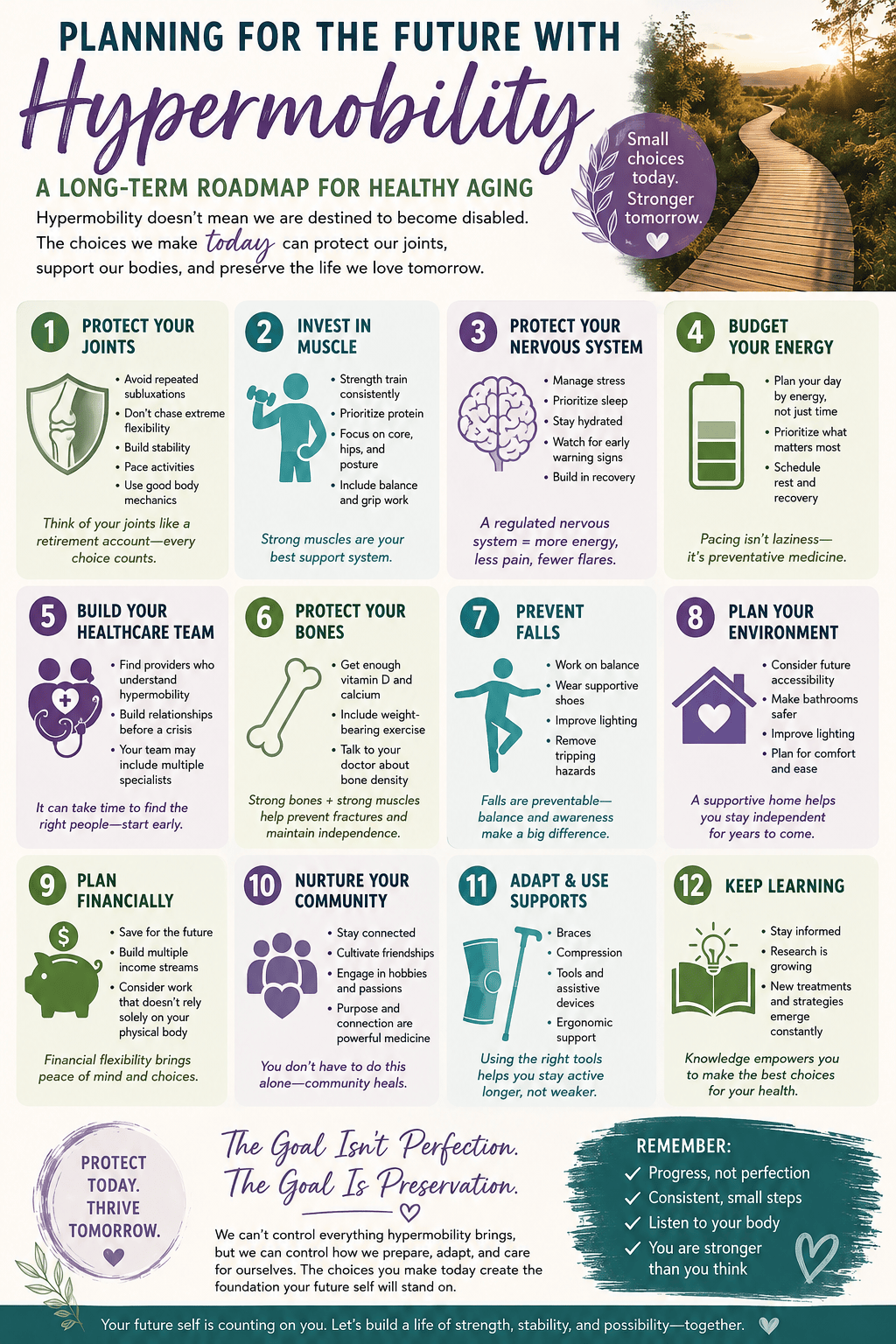
Most of us understand saving money for retirement.
Every deposit we make today benefits our future selves.
Our bodies work in much the same way.
Every healthy habit is a deposit.
Every preventable injury is a withdrawal.
Hypermobility doesn’t mean we are destined to become disabled. However, because our connective tissue provides less passive stability, we often depend more heavily on our muscles, nervous system, and movement habits to keep us functioning well.
The goal isn’t perfection.
The goal is preserving function.
Many hypermobile people spent years being complimented on their flexibility.
Ironically, flexibility is rarely what we need more of.
Instead, we need stability.
Our muscles become the body’s “external ligaments,” helping support joints that naturally move beyond their ideal range.
Strength training doesn’t have to mean lifting heavy weights or becoming a bodybuilder.
It means developing functional strength that supports everyday life:
The stronger your muscles, the more they can help protect your joints throughout life.
Many people with hypermobility also experience conditions such as dysautonomia, migraine, mast cell activation, chronic pain, fatigue, or sensory overload.
For many of us, managing our nervous system is just as important as managing our joints.
Pay attention to the factors that commonly trigger flares:
Sometimes the best treatment isn’t pushing harder.
Sometimes it’s recognizing the warning signs before your body forces you to stop.
Most healthy adults schedule their lives according to time.
Many people with hypermobility have to schedule according to energy.
Some days you may have enough energy for work, exercise, and dinner with friends.
Other days, simply getting through work may use your entire “energy budget.”
Learning to pace yourself is not laziness.
It is a legitimate medical strategy that helps prevent major flares and supports long-term function.
Every injury matters.
Repeated sprains, joint instability, falls, and subluxations can accumulate over decades.
Simple habits make a difference:
Protecting your joints today may reduce arthritis and chronic pain later in life.
Movement is medicine.
The challenge is finding the right amount.
Complete inactivity weakens muscles.
Too much activity can trigger flares.
The goal is consistent, sustainable movement.
Many people with hypermobility do well with activities such as:
The best exercise is often the one your body can tolerate consistently.
One of the biggest mistakes many people make is waiting until they are in crisis before searching for specialists.
Instead, slowly build relationships with healthcare professionals who understand connective tissue disorders.
Your team may include:
Finding knowledgeable providers often takes time.
Starting before a crisis can reduce stress later.
As we age, muscle mass naturally declines, and bone density may decrease, especially after menopause.
Talk with your healthcare provider about whether you would benefit from:
Strong muscles and healthy bones work together to reduce the risk of falls and fractures.
This doesn’t mean expecting disability.
It means making thoughtful choices that support independence.
Consider questions such as:
Planning ahead often means you’ll never need many of these modifications.
Many people with hypermobility work physically demanding jobs.
Ask yourself:
“If my body changes, how else can I continue doing meaningful work?”
Perhaps through:
Building additional skills today can provide flexibility later.
Health is about more than joints.
Stay connected to family, friends, colleagues, hobbies, and your community.
Research consistently shows that meaningful social connections contribute to better physical and mental health as we age.
Purpose matters.
Connection matters.
There may come a day when you benefit from:
These are not signs of failure.
They are tools that help preserve independence.
Using the right support at the right time often allows people to remain active far longer.
When I think about my future, I don’t ask whether I’ll still be as flexible or whether my pain will completely disappear.
I ask a different question:
Will I still be able to teach?
Will I still be able to write?
Will I still be able to help people understand hypermobility?
For me, that is success.
Living well with hypermobility isn’t about eliminating every symptom.
It’s about preserving the ability to continue living a meaningful life.
The choices we make today become the foundation our future selves stand on.
Perhaps the greatest gift we can give ourselves isn’t another stretch, another supplement, or another gadget.
Perhaps it’s making decisions today that allow us to keep doing what we love for years to come.
Our future selves are counting on us.
Massage therapists living with hypermobility face unique challenges because our careers rely on our bodies.
Long-term career planning should include:
Protecting yourself allows you to continue helping others.
This article is intended for educational purposes only and should not replace medical advice, diagnosis, or treatment from a qualified healthcare professional. Hypermobility exists on a spectrum, and every individual has different needs. Always consult your healthcare provider before beginning a new exercise program, changing medications, or making significant health decisions.
By Jennifer Richards, LMT, NCBTMB Approved Provider
Over the past several weeks, I’ve noticed an interesting pattern in online support communities for people with hypermobility and Ehlers-Danlos syndrome (EDS).
Several individuals shared that after significant weight loss—whether through GLP-1 medications, bariatric surgery, chemotherapy, or serious illness—they actually felt worse, not better.
Their stories weren’t identical, but common themes emerged:
As a massage therapist and educator specializing in hypermobility, I found myself asking a question:
Are we missing an opportunity to support these patients during major physiological changes rather than waiting until afterward?
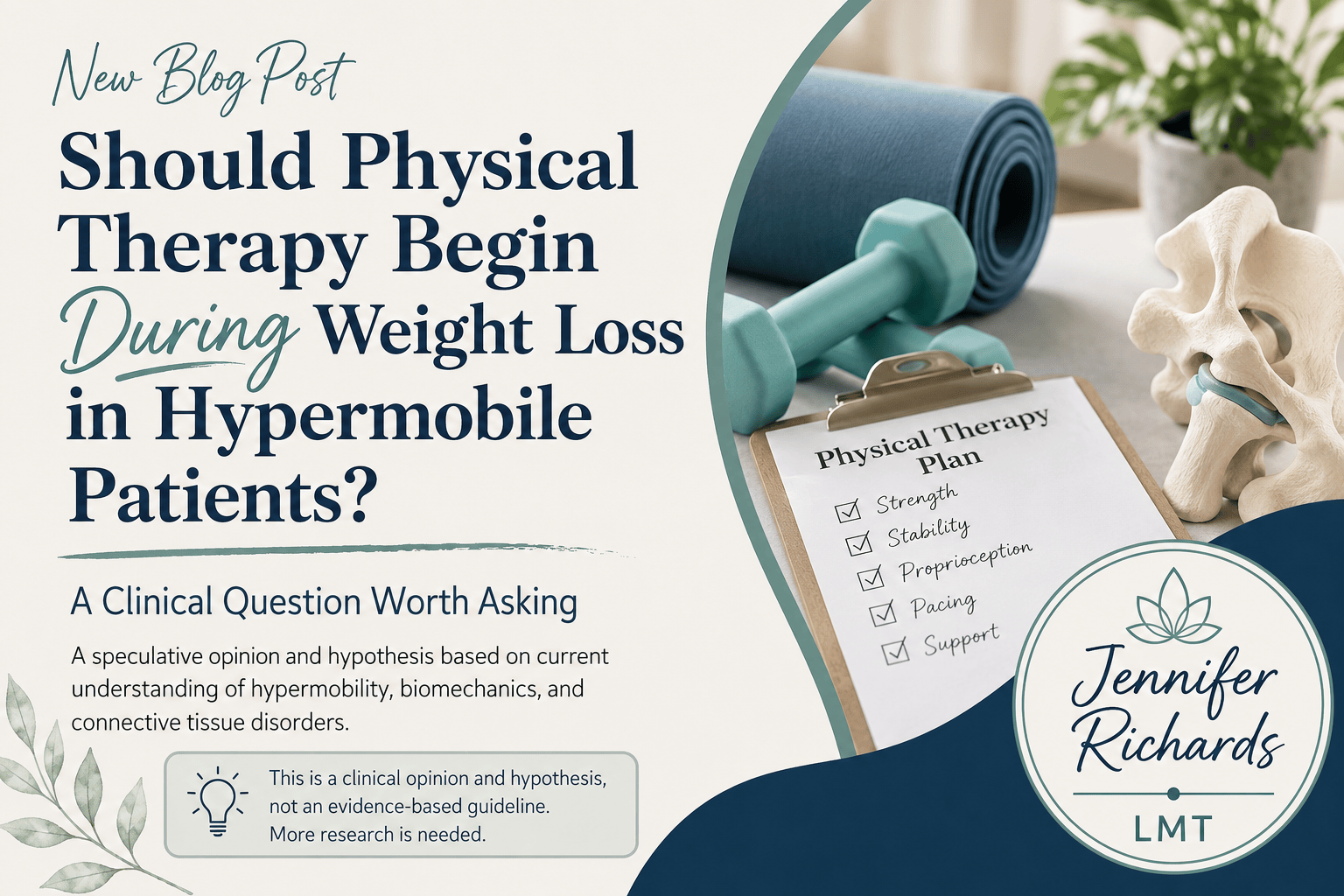
I want to be very clear: what follows is my clinical opinion and a hypothesis based on current understanding of hypermobility, biomechanics, and connective tissue disorders. It is not an evidence-based guideline, and research specifically addressing this question is currently lacking.
Hypermobile joints rely less on ligament stability and more on dynamic stabilization from muscles, proprioception, and motor control.
When someone experiences significant weight loss, their body undergoes much more than a reduction in body fat.
Changes may include:
For someone with typical connective tissue, these changes may simply require an adjustment period.
For someone with hypermobility, they may reveal weaknesses that had previously been compensated for by muscle strength or habitual movement patterns.
One thing that stood out to me was that the cause of the weight loss varied.
Some people used GLP-1 medications.
Some underwent bariatric surgery.
Others lost weight because of chemotherapy or serious illness.
The common denominator wasn’t necessarily how they lost weight.
It was that their bodies had experienced a significant physiological stress.
That made me wonder whether the body’s stabilization systems are challenged whenever major changes occur, regardless of the reason.
Several commenters mentioned being told that physical therapy would begin after reaching their target weight.
That surprised me.
Again, this is my opinion—but I wonder if that timing may miss an important opportunity.
If muscle strength, proprioception, posture, gait, and joint stability are changing throughout the weight-loss journey, wouldn’t it make sense to monitor and support those changes as they occur?
Rather than waiting until the process is complete.
Perhaps physical therapy for hypermobile individuals could focus on:
The goal would not simply be rehabilitation after weight loss.
It would be guidance throughout the process.
Please don’t misunderstand my point.
Many people experience tremendous health benefits from weight loss.
Lower blood pressure.
Improved diabetes management.
Less sleep apnea.
Reduced stress on weight-bearing joints.
Sometimes these treatments are medically necessary or even life-saving.
I’m certainly not suggesting that people avoid them.
Instead, I’m asking whether hypermobile patients may benefit from a different rehabilitation model than the general population.
At present, I’m not aware of studies specifically examining whether:
That doesn’t mean the answer is “no.”
It means we don’t yet know.
And when patients consistently describe similar experiences, I believe those experiences deserve careful study.
Patient stories should not replace scientific evidence—but they can help generate important research questions.
As researchers continue to learn more about hypermobility, I hope we begin asking questions like:
These are questions that matter—not because we want to discourage weight loss, but because we want patients to thrive during it.
One of the most important lessons I’ve learned from working with hypermobile clients is that our connective tissue changes the rules.
What works well for the general population isn’t always the best approach for someone living with joint hypermobility.
Perhaps rehabilitation shouldn’t begin only after a major body transformation.
Perhaps it should be part of the journey itself.
I don’t know the answer.
But I think it’s a question worth asking.
Medical Disclaimer
This article reflects the author’s clinical observations and opinions and is intended for educational purposes only. It should not be interpreted as medical advice or as an evidence-based treatment recommendation. Individuals considering weight-loss medications, bariatric surgery, cancer treatment, or physical therapy should consult their physician and other qualified healthcare professionals. Further research is needed to determine the optimal rehabilitation strategies for people with hypermobility during significant physiological change.
Castori M, Hakim A. Contemporary approach to joint hypermobility and related disorders.
The International Consortium on the Ehlers-Danlos Syndromes. 2017 International Classification.
American College of Sports Medicine. ACSM’s Guidelines for Exercise Testing and Prescription.
The Ehlers-Danlos Society. Educational resources on hypermobile EDS, HSD, physical therapy, and exercise.
Stubbs B, et al. Skeletal muscle changes associated with weight loss and implications for physical function. Clinical Nutrition.
American Society for Metabolic and Bariatric Surgery (ASMBS). Nutritional and rehabilitation guidance following bariatric surgery.

499 pages dedicated to understanding hypermobility through the lens of massage therapy.
This comprehensive guide begins with the anatomy, physiology, pathology, and kinesiology of hypermobility, building the foundation massage therapists need to understand what may be happening beneath their hands.
From there, we explore common comorbidities, contraindications, cautions, and clinical considerations before moving body system by body system to examine how hypermobility and connective tissue disorders can affect far more than the musculoskeletal system.
Then we bring that knowledge into the treatment room.
Learn how to adapt massage therapy for the hypermobile body—including positioning, pressure, stretching, joint protection, communication, pacing, and session planning—while recognizing when treatment should be modified, postponed, or referred to another healthcare professional.
And because many massage therapists are hypermobile themselves, this book also addresses therapist body mechanics, joint protection, and strategies for building a sustainable career without sacrificing your own body.
Practical resources include sample intake forms, SOAP notes, client handouts, safety guidance, and clinical tools that can be incorporated into practice and education.
A comprehensive reference list is included throughout so readers can explore the research, evaluate the evidence, and continue learning for themselves.
499 pages. One goal: helping massage therapists understand the hypermobile body so they can work more safely, thoughtfully, and effectively.


One of the most common things I hear from people with hypermobility is:
“I’m tired all the time.”
Not just “I need a nap” tired.
We’re talking about the kind of fatigue that can make getting out of bed feel overwhelming. The kind where a trip to the grocery store requires hours—or even days—of recovery. The kind that friends and family often misunderstand because the person “looks fine.”
Many people assume this level of fatigue is simply part of living with Ehlers-Danlos syndrome (EDS) or Hypermobility Spectrum Disorder (HSD). While fatigue is certainly common in these conditions, there may be another explanation for some individuals: Myalgic Encephalomyelitis/Chronic Fatigue Syndrome (ME/CFS).
Although these are separate conditions, researchers are finding that they frequently overlap.

Myalgic Encephalomyelitis/Chronic Fatigue Syndrome (ME/CFS) is a complex, chronic illness that affects multiple body systems. It is far more than “being tired.”
People with ME/CFS may experience:
One hallmark symptom sets ME/CFS apart from many other illnesses: post-exertional malaise (PEM).
Post-exertional malaise is a worsening of symptoms after physical, mental, or emotional activity that would not have caused problems before becoming ill.
The symptoms often do not appear immediately. Instead, they may develop 12 to 48 hours later and can last for days or even weeks.
For example, someone may feel well enough to attend a family gathering on Saturday but wake up Monday feeling as though they have the flu, with overwhelming fatigue, body aches, and brain fog.
This delayed “crash” is considered one of the defining characteristics of ME/CFS.
Researchers are still working to understand the connection, but several theories are emerging.
Many people with hypermobility also experience dysfunction of the autonomic nervous system, including conditions such as Postural Orthostatic Tachycardia Syndrome (POTS).
Symptoms can include:
These same symptoms are also common in ME/CFS.
Connective tissue is found throughout the body—not only in joints but also in blood vessels, nerves, the digestive tract, and many other organs.
Researchers believe that abnormalities in connective tissue may contribute to problems with blood vessel function and circulation, leading to reduced blood flow to the brain and muscles during activity.
Some individuals with hypermobility also experience Mast Cell Activation Syndrome (MCAS), which can cause:
Although research is ongoing, mast cell activation may contribute to inflammation, fatigue, and autonomic dysfunction in some people.
Chronic pain and poor sleep often occur together.
People with EDS frequently report:
When restorative sleep is disrupted night after night, fatigue can become overwhelming.
For years, people with chronic fatigue were often told they simply needed to exercise more.
We now know the answer is much more complicated.
People with hypermobility generally benefit from carefully designed strengthening programs that improve joint stability.
However, for individuals with ME/CFS, pushing through fatigue can worsen symptoms because of post-exertional malaise.
Understanding the difference is essential.
Massage therapists are often among the first healthcare professionals to hear clients describe symptoms that extend beyond muscles and joints.
When working with hypermobile clients, it is helpful to ask questions such as:
These conversations can help guide treatment planning and may encourage clients to discuss their symptoms with their healthcare provider.
Massage therapists do not diagnose ME/CFS, but we can recognize patterns, provide appropriate modifications, and support clients with compassionate, individualized care.
Not every person with hypermobility has ME/CFS.
Not every person with ME/CFS has hypermobility.
But for those living with both, understanding the connection can be life-changing.
Recognizing that profound fatigue is not laziness—and that symptoms have a physiological basis—can help people seek appropriate care, pace their activities, and better understand their own bodies.
As research continues, we’re learning that hypermobility is far more than flexible joints. It can affect the nervous system, circulation, immune system, sleep, digestion, and overall quality of life.
The more we understand these connections, the better we can support those living with them.
Disclaimer: This article is intended for educational purposes only and should not be considered medical advice. Individuals experiencing persistent fatigue, post-exertional malaise, dizziness, or other concerning symptoms should consult a qualified healthcare professional for evaluation and diagnosis.


This article is for educational purposes only and is not intended to diagnose, treat, cure, or prevent any disease. Always consult a qualified healthcare professional regarding your individual medical concerns. MCAS is a complex condition that requires medical evaluation and individualized treatment.
Mast Cell Activation Syndrome (MCAS) is a condition in which mast cells become overly reactive and release excessive amounts of inflammatory chemicals, often inappropriately or in response to triggers that would not normally cause a significant reaction.
Mast cells are immune cells found throughout the body, especially in:
Their job is to protect us from infection, parasites, toxins, and injury. They act as “first responders” in the immune system.
When functioning normally, mast cells release chemical messengers only when needed. In MCAS, they can release these chemicals too frequently, too intensely, or at inappropriate times.
Mast cells contain hundreds of biologically active substances, including:
These chemicals affect:
This is why MCAS can affect nearly every body system.
Researchers do not yet have a complete answer.
Current theories include:
Some people appear genetically prone to having more reactive mast cells.
Changes in connective tissue may influence how mast cells behave and communicate with surrounding tissues.
The immune system may become overly sensitive after:
Mast cells communicate directly with the nervous system.
When the autonomic nervous system becomes dysregulated, mast cells may become easier to trigger.
MCAS is generally not considered something you “catch.”
Rather, it appears to develop through a combination of:
Many people report symptoms worsening after:
Symptoms vary dramatically from person to person.
Some individuals experience episodes resembling allergic reactions or even anaphylaxis despite no obvious allergy trigger.
Triggers are highly individual but may include:
A trigger that affects one person may not affect another.
One of the most discussed relationships in recent years is the overlap among:
Researchers continue to investigate why these conditions frequently occur together.
Proposed explanations include:
Mast cells are abundant within connective tissues.
Since connective tissue is altered in hypermobility disorders, mast-cell behavior may also be affected.
Histamine causes blood vessels to dilate.
This can worsen symptoms commonly seen in POTS and dysautonomia, including:
Mast cells and the autonomic nervous system constantly communicate.
Both dysautonomia and MCAS involve disruptions in these regulatory systems.
Researchers suspect there may be overlapping genetic and biological pathways, though definitive answers remain under investigation.
Diagnosis can be challenging.
Typically, physicians look for:
Testing may include:
Because mast-cell mediators fluctuate, normal testing does not always rule out MCAS.
Depending on symptoms, care may involve:
Many patients ultimately require a team approach.
Currently, there is no universally accepted cure.
Treatment focuses on reducing symptoms, minimizing triggers, and stabilizing mast cells.
Common approaches include:
Identifying and avoiding triggers when possible.
Under physician supervision:
Some individuals benefit from temporary reduction of high-histamine foods under guidance from knowledgeable healthcare professionals.
Clients with hypermobility frequently report symptoms suggestive of mast-cell dysfunction.
A therapist may notice:
Understanding MCAS can help therapists:
For educational materials, consider citing:
MCAS is a disorder of mast-cell overactivation that can affect nearly every body system. While researchers are still uncovering exactly why it occurs, it appears to overlap significantly with hypermobility disorders, dysautonomia, and related connective tissue conditions. For people with hypermobility, understanding mast-cell dysfunction may help explain symptoms that otherwise seem unrelated—from hives and digestive issues to rapid heart rate, fatigue, and medication sensitivities.
Jennifer Richards, LMT
Educating massage therapists about hypermobility, connective tissue disorders, and client safety.
Have a WordPress.com account? Log in now.

