By Jennifer Richards, LMT 2026
Why some hypermobile bodies struggle with heat and cold
Many people with hypermobility notice that their bodies respond differently to temperature. They may feel extremely hot, unusually cold, or have difficulty regulating body temperature during exercise, stress, or environmental changes.
These symptoms are often connected to the autonomic nervous system and circulation.
Hypermobility conditions such as Ehlers-Danlos Syndrome (EDS) can affect connective tissue throughout the body, including structures that help regulate blood vessels and circulation. When these systems behave differently, temperature regulation can sometimes be affected.
The Autonomic Nervous System
The autonomic nervous system controls many automatic body functions, including:
heart rate
blood pressure
sweating
body temperature regulation
Many individuals with hypermobility also experience autonomic nervous system dysregulation, sometimes diagnosed as Postural Orthostatic Tachycardia Syndrome (POTS).
When this system becomes dysregulated, the body may have difficulty adjusting to temperature changes.
Blood Vessel Regulation
Blood vessels play an important role in controlling body temperature.
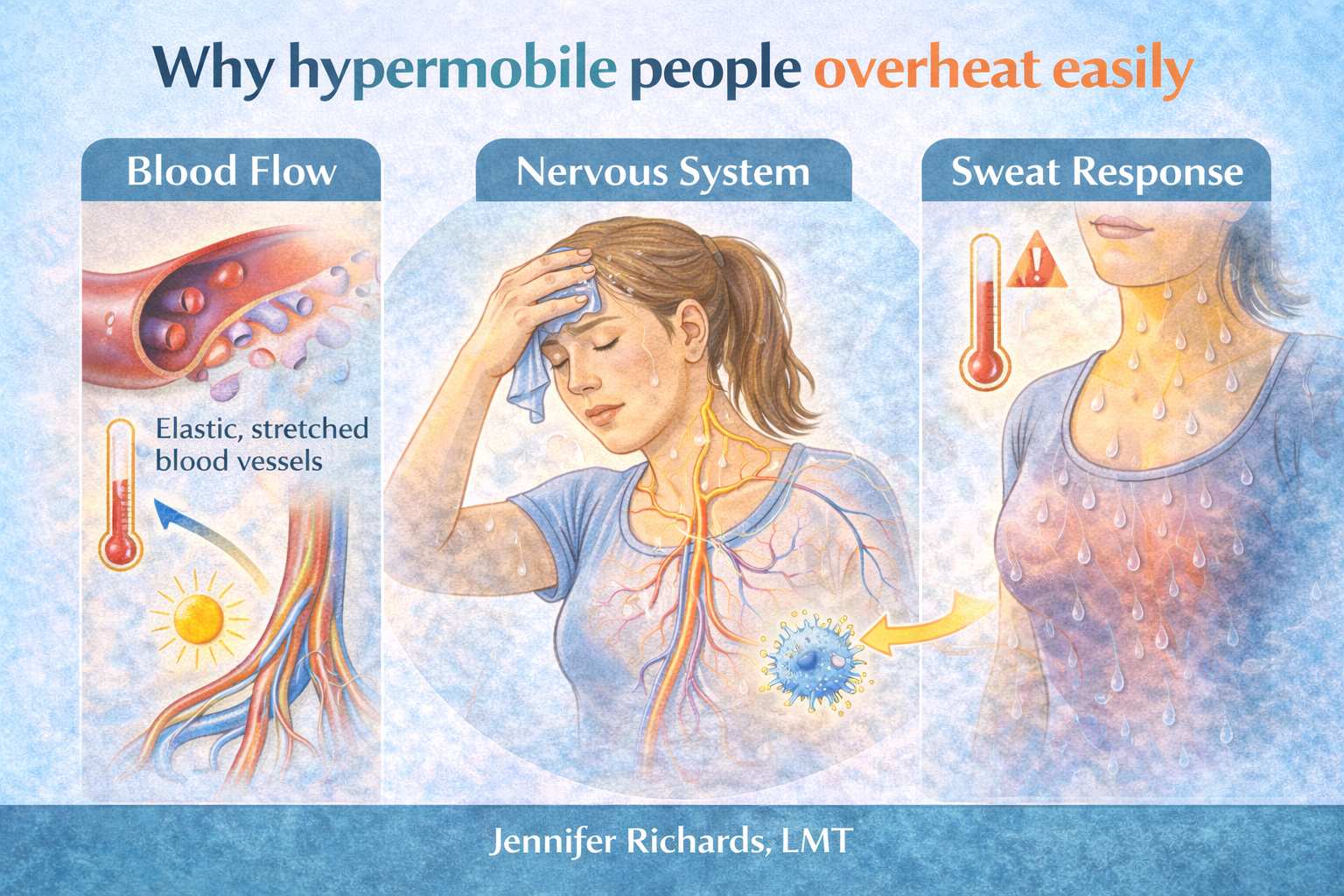
When the body becomes too warm, blood vessels expand to release heat.
When the body becomes cold, vessels constrict to conserve heat.
In hypermobile individuals, blood vessels may be more elastic due to connective tissue differences. This can affect circulation and the body’s ability to regulate temperature effectively.
Common Temperature Symptoms
Some individuals with hypermobility report:
Heat intolerance
feeling overheated quickly
dizziness in warm environments
difficulty exercising in heat
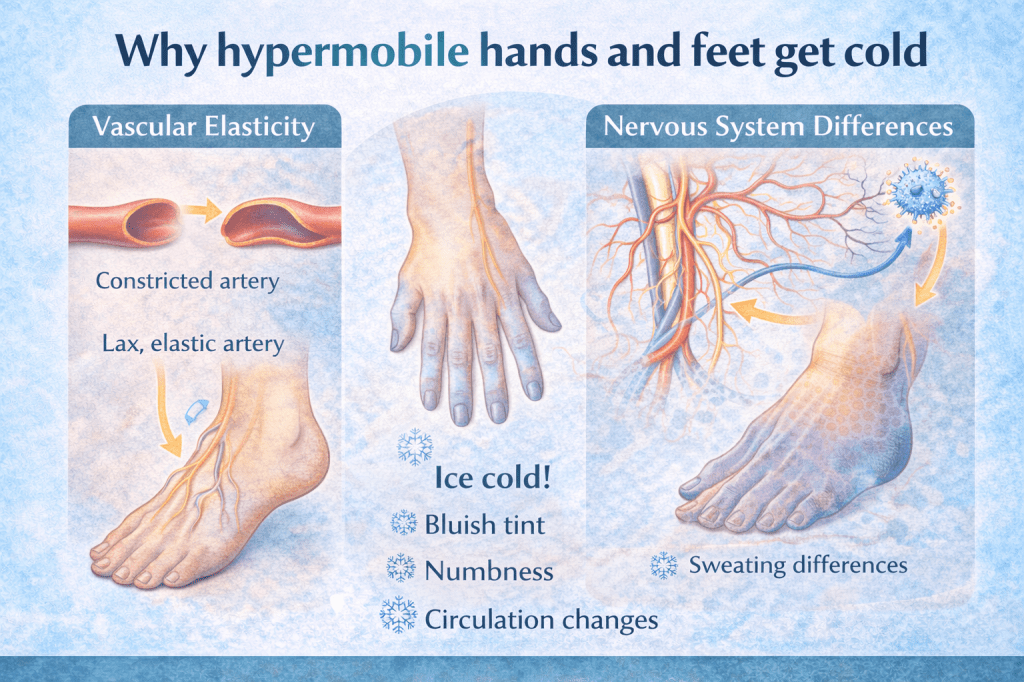
Cold intolerance
cold hands and feet
sensitivity to cold temperatures
circulation changes
Sweating differences
excessive sweating
reduced sweating in some cases
These experiences vary widely and do not occur in every hypermobile person.
Why This Matters for Bodywork
Temperature sensitivity can influence how hypermobile clients respond to massage therapy.
Because massage affects circulation and the nervous system, therapists may notice clients who feel unusually warm, chilled, or lightheaded during treatment.
Massage Therapy Considerations
Massage therapists do not treat autonomic disorders, but session adaptations can improve comfort.
Temperature Awareness
Some clients may feel overheated under heavy blankets or table warmers. Others may become cold easily.
Adjusting room temperature, sheets, and table warmers can help maintain comfort.
Gradual Position Changes
Individuals with autonomic symptoms may feel dizzy when sitting or standing quickly.
Allowing extra time to sit up slowly can reduce symptoms.
Hydration
Clients who experience dysautonomia may benefit from adequate hydration before and after sessions.
Gentle Nervous System Support
Techniques that encourage relaxation and parasympathetic activity may help support nervous system regulation.
Many hypermobile clients respond well to slower, calming massage approaches rather than aggressive deep pressure.
Awareness Matters
Temperature regulation is one of many ways the nervous system and connective tissue interact in hypermobile bodies.
Understanding these patterns can help individuals recognize symptoms and communicate their needs during healthcare or bodywork sessions.
Education helps both practitioners and clients create safe and supportive treatment experiences.
Helpful Resource
For additional information about autonomic dysfunction in connective tissue disorders, visit The Ehlers-Danlos Society:
Autonomic dysfunction in Ehlers-Danlos syndromes
https://www.ehlers-danlos.com/autonomic-dysfunction/
This resource explains how the autonomic nervous system can affect circulation, heart rate, and temperature regulation in hypermobile individuals.
Educational Disclaimer
Hypermobility and Ehlers-Danlos Syndrome exist on a spectrum. Every individual experiences connective tissue disorders differently, and not everyone will experience the symptoms or challenges discussed in this article.
The information shared here is intended for educational and awareness purposes only. It is not intended to diagnose, treat, or replace medical advice from a qualified healthcare professional.
Massage therapists do not diagnose medical conditions. If you are experiencing significant temperature intolerance, dizziness, or symptoms related to autonomic dysfunction, please consult an appropriate healthcare provider.
— Jennifer Richards, LMT


