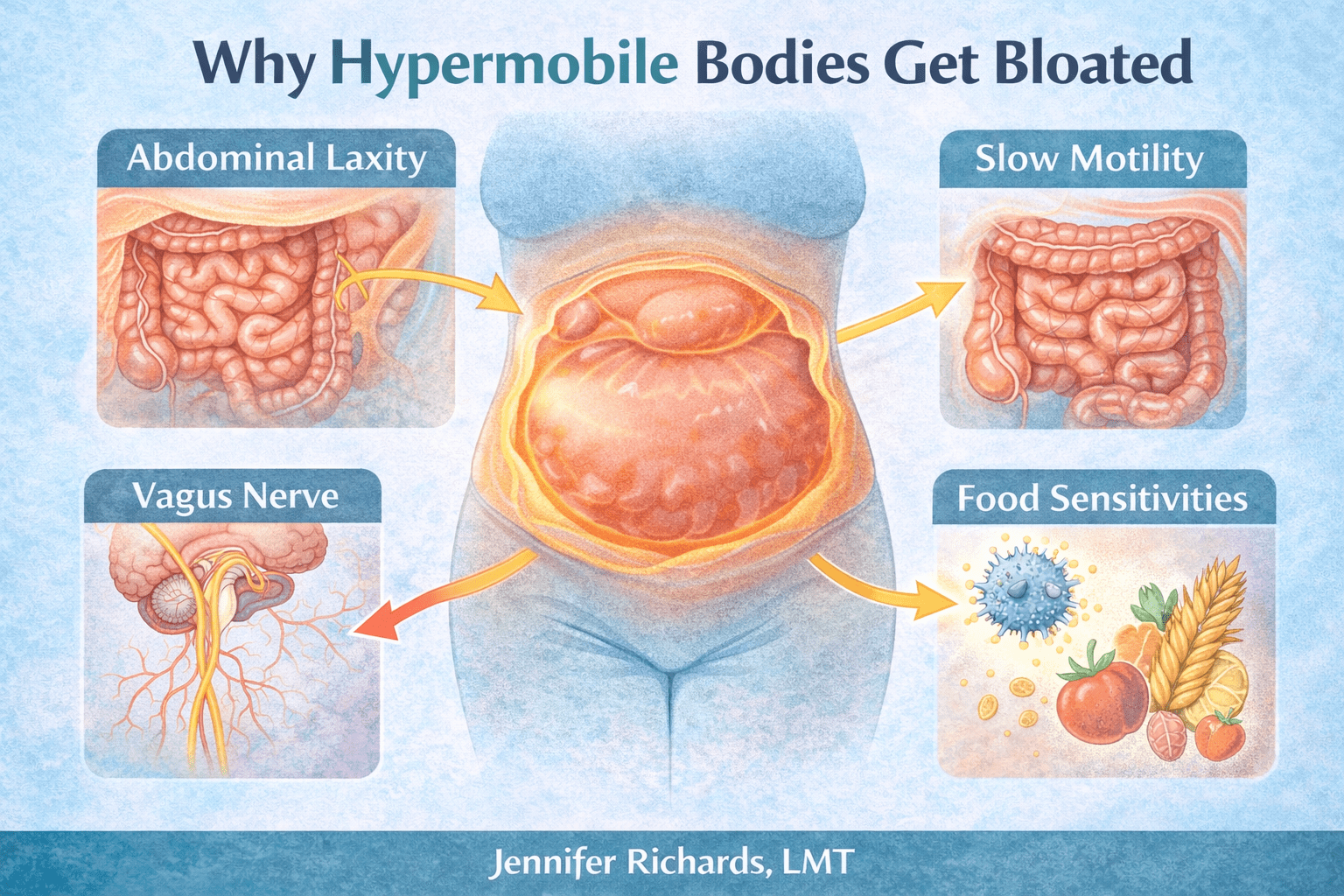
By Jennifer Richards, LMT 2026
Why connective tissue affects digestion
When people think about hypermobility or Ehlers-Danlos Syndrome (EDS), they often picture flexible joints or unstable ligaments. However, connective tissue exists throughout the entire body—including the digestive system.
The gastrointestinal tract relies on connective tissue to support organs and coordinate the muscular contractions that move food through the digestive system. When connective tissue behaves differently, digestion can sometimes be affected.
Not everyone with hypermobility experiences digestive symptoms, but gastrointestinal issues are reported by many people with EDS or hypermobility spectrum disorders.
Connective Tissue and Digestion
The digestive system depends on coordinated muscle contractions called peristalsis to move food through the esophagus, stomach, and intestines.
In connective tissue disorders, structures that support these muscles may be more elastic or less stable. This can sometimes lead to changes in gastrointestinal motility, meaning food may move through the digestive system either too slowly or unpredictably.
Common Gastrointestinal Symptoms
People with hypermobility may report a variety of digestive symptoms, including:
Reflux and Heartburn
The valve between the stomach and esophagus (the lower esophageal sphincter) helps prevent stomach acid from moving upward. If connective tissue is more lax, reflux symptoms may occur more easily.
Symptoms may include:
heartburn
acid reflux
chest discomfort
throat irritation
Bloating and Abdominal Distention
Bloating is frequently reported in hypermobile individuals. This may be related to digestive motility changes or increased sensitivity in the gastrointestinal tract.
Symptoms may include:
visible abdominal distention
gas buildup
abdominal discomfort
Constipation
Some individuals experience slower intestinal movement.
This can result in:
infrequent bowel movements
abdominal pressure
discomfort
Adequate hydration, dietary adjustments, and medical guidance can often help manage these symptoms.
Nausea or Early Fullness
Some people with hypermobility report feeling full very quickly when eating. In certain cases this may be related to delayed stomach emptying.
Symptoms may include:
nausea
feeling full after small meals
reduced appetite
Nervous System Connections
Many people with EDS also experience autonomic nervous system conditions such as Postural Orthostatic Tachycardia Syndrome (POTS).
The autonomic nervous system helps regulate digestion. When it is dysregulated, symptoms like nausea, bloating, or irregular digestion can sometimes occur.
Some individuals with hypermobility also experience Mast Cell Activation Syndrome (MCAS), which can affect gastrointestinal symptoms and food sensitivities.
Why This Matters for Massage Therapy
Massage therapists working with hypermobile clients may notice abdominal or digestive complaints mentioned during intake.
While massage therapists do not diagnose gastrointestinal conditions, bodywork can sometimes help support overall comfort.
Helpful Adaptations for Hypermobile Clients
Gentle Pressure
Deep abdominal pressure may not be appropriate for some hypermobile individuals, especially if the client experiences abdominal sensitivity.
Positioning Support
Supportive bolstering can help reduce strain on the abdomen and lower back during treatment.
Avoid Excessive Stretching
Aggressive stretching of abdominal or hip structures may increase joint instability in hypermobile individuals.
Focus on Nervous System Relaxation
Techniques that support relaxation may help calm the nervous system, which can indirectly support digestive comfort.
Communication
Clients experiencing digestive symptoms may prefer shorter sessions or different positioning. Open communication helps tailor the session appropriately.
Awareness Matters
Digestive symptoms are often overlooked in discussions about hypermobility. Understanding that connective tissue exists throughout the body—including the gastrointestinal tract—can help individuals recognize patterns in their health.
Education also helps people advocate for themselves and seek appropriate medical guidance when symptoms arise.
Helpful Resources
For additional information, visit resources from the The Ehlers-Danlos Society:
Gastrointestinal involvement in EDS
https://www.ehlers-danlos.com/gastrointestinal-involvement-in-the-ehlers-danlos-syndromes/
Standard Article Disclaimer
Educational Disclaimer
Hypermobility and Ehlers-Danlos Syndrome exist on a spectrum. Every individual experiences connective tissue disorders differently, and not everyone will experience the symptoms or challenges discussed in this article.
The information shared here is intended for educational and awareness purposes only. It is not intended to diagnose, treat, or replace medical advice from a qualified healthcare professional.
Massage therapists do not diagnose medical conditions. If you are experiencing digestive symptoms, pain, or health concerns related to hypermobility or connective tissue disorders, please consult an appropriate healthcare provider.
— Jennifer Richards, LMT

 Tranquil Touch Wellness: Jennifer Richards, LMT