By Jennifer Richards, LMT 2026
Many people with hypermobility or Ehlers-Danlos Syndrome (EDS) report unusual reactions to everyday substances such as perfumes, cleaning products, lotions, medications, or smoke. These reactions are sometimes described as chemical sensitivity.
While not every hypermobile person experiences this, it is common enough that clinicians and researchers have begun exploring possible connections.
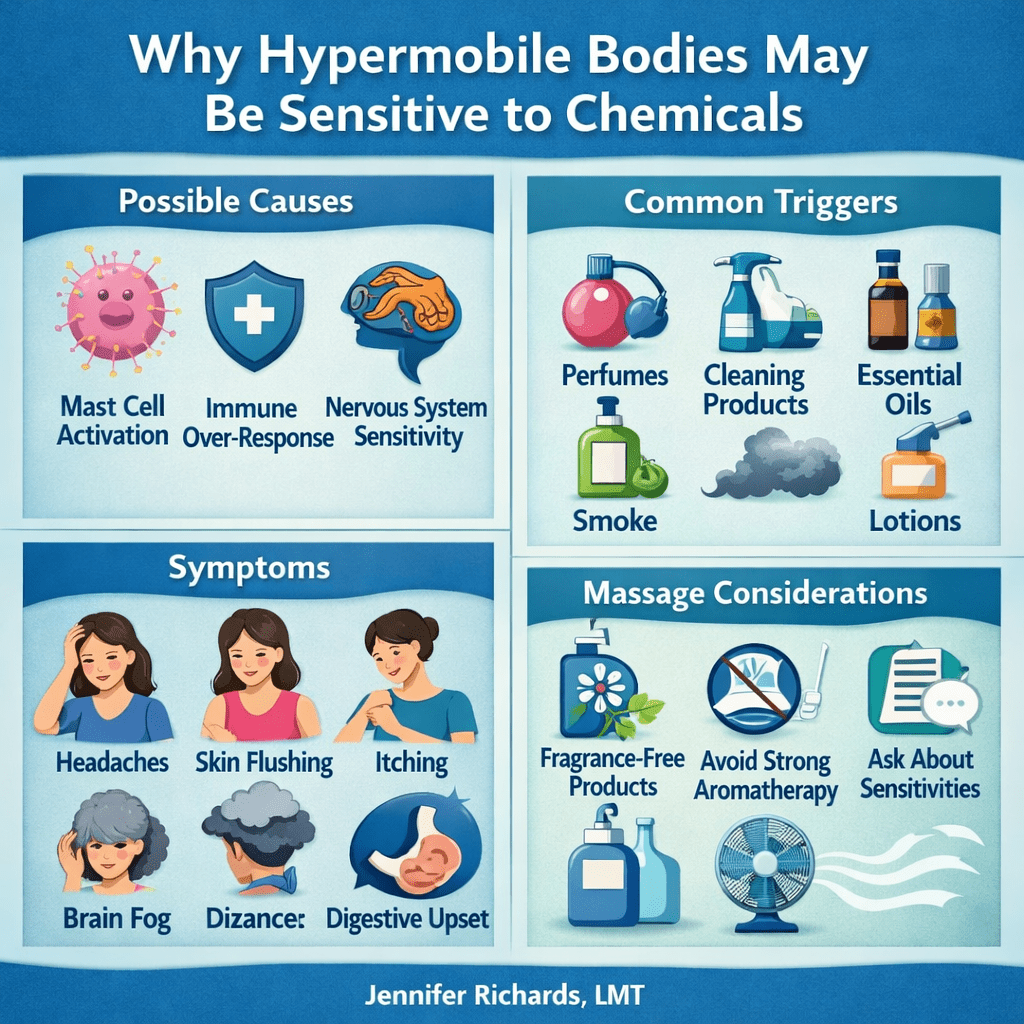
Why chemical sensitivity may occur in hypermobility
One possible explanation involves mast cells, which are immune cells found throughout the body—especially in the skin, gastrointestinal tract, and connective tissues.
Mast cells release chemical mediators such as histamine, prostaglandins, and leukotrienes when they detect a threat. These chemicals are part of the body’s defense system and cause inflammatory reactions like itching, flushing, swelling, and digestive symptoms.
In some people with hypermobility or Ehlers-Danlos Syndrome, mast cells may become overactive or dysregulated, a condition often called Mast Cell Activation Syndrome (MCAS).
Research suggests that connective tissue differences in EDS may affect the extracellular matrix (ECM)—the structural network surrounding cells. Mast cells interact with this matrix, so changes in connective tissue may alter how mast cells behave.
When mast cells activate too easily, even mild exposures can trigger symptoms such as:
• headaches
• skin flushing or itching
• nasal congestion
• digestive upset
• dizziness
• fatigue
• sensitivity to perfumes, smoke, or chemicals
These reactions may explain why some hypermobile individuals report feeling unwell in environments with strong scents, cleaning agents, or synthetic fragrances.
This does not mean the person is “allergic” to everything, but rather that their immune and nervous systems may be more reactive to environmental triggers.
What this means for massage therapy
For massage therapists, chemical sensitivity is an important consideration.
Many massage environments contain potential triggers.
Examples include:
• essential oils
• scented lotions or creams
• laundry detergents on sheets
• room sprays or candles
• cleaning products used on tables
For clients with hypermobility or suspected mast cell issues, these exposures may cause headaches, skin irritation, flushing, or dizziness.
Practical massage considerations
A few simple adjustments can make sessions much safer and more comfortable.
1. Choose unscented products
Use hypoallergenic or fragrance-free massage lotions when possible.
2. Avoid strong aromatherapy
Even therapeutic essential oils can trigger reactions in sensitive individuals.
3. Ask before using new products
A simple intake question can help:
“Do you have sensitivities to scents, lotions, or essential oils?”
4. Maintain good ventilation
Fresh airflow can reduce exposure to chemical triggers.
5. Keep sessions calm and predictable
Stress and nervous system activation can also worsen mast cell reactions.
6. Be aware of skin reactions
If redness, itching, or hives appear during a session, discontinue the product immediately.
Massage therapists should remember that chemical sensitivity is not always visible, but respecting client triggers can dramatically improve comfort and safety.
Learn more
The Ehlers-Danlos Society provides information on mast cell disorders and their possible connection with EDS.
You can learn more here:
https://www.ehlers-danlos.com/mast-cell-disorders-ehlers-danlos-syndrome/
Mast cell activation disorders involve excess release of inflammatory chemicals such as histamine, which can produce allergy-like symptoms throughout the body.
Takeaway
For some hypermobile individuals, the body’s immune and nervous systems may be more reactive to environmental triggers.
Understanding chemical sensitivity helps massage therapists create a safer, more supportive environment for clients living with hypermobility and related conditions.
Small adjustments—like fragrance-free products and open communication—can make a significant difference.
Disclaimer
This article is for educational purposes only and is not intended to diagnose, treat, or replace medical care. Individuals with suspected mast cell disorders, chemical sensitivities, or Ehlers-Danlos Syndrome should consult a qualified healthcare professional for evaluation and treatment. Massage therapists should work within their scope of practice and collaborate with appropriate healthcare providers when supporting clients with complex medical conditions.


