By Jennifer Richards, LMT 2026
Many people with hypermobility hear the same comment growing up:
“You’ll grow out of it.”
While it is true that joint flexibility often decreases with age, the story is more complicated for people with hypermobility or Ehlers-Danlos Syndrome (EDS).
Understanding how a hypermobile body changes over time is important not only for clients—but also for massage therapists working with them.
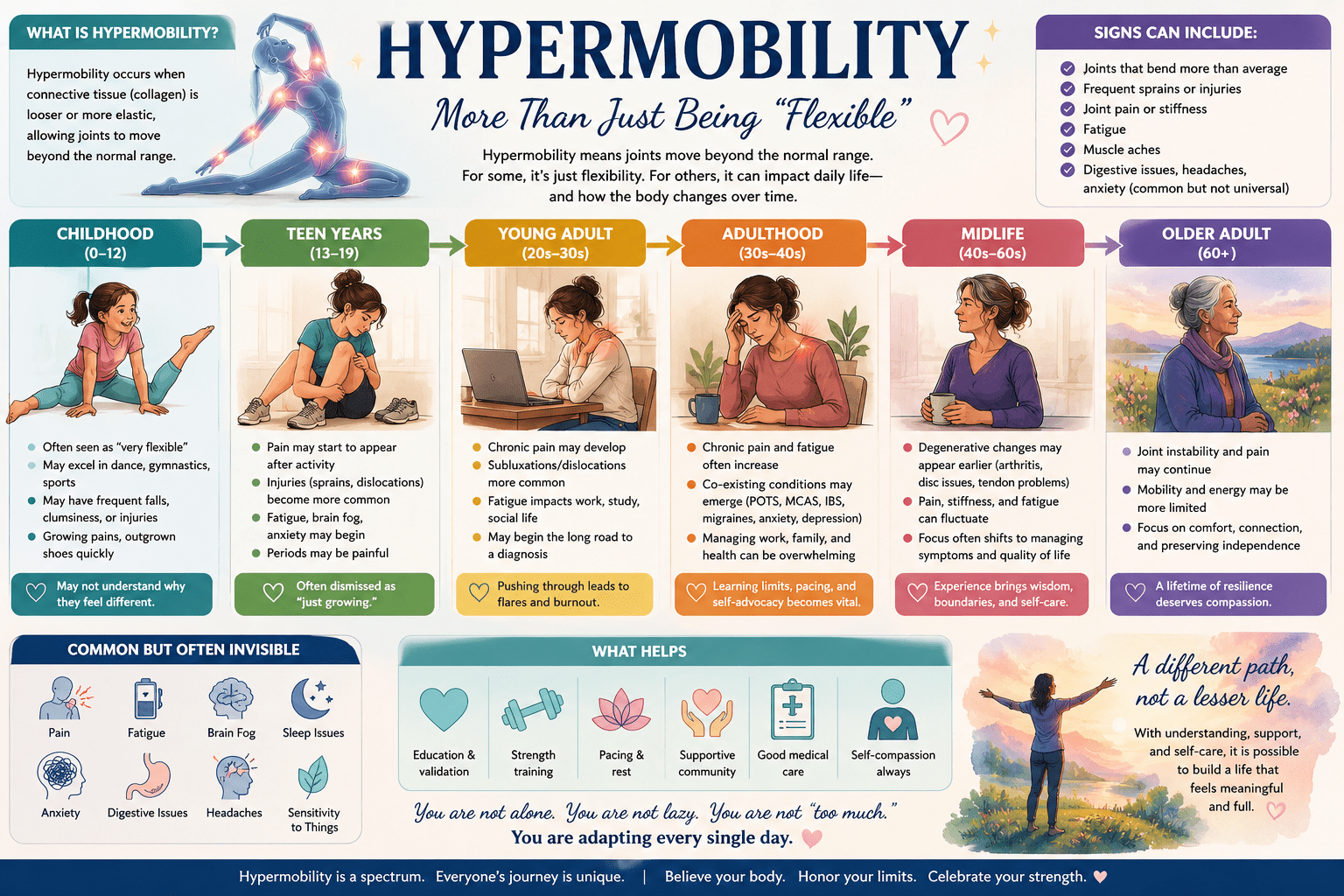
What happens to a hypermobile body over time
Hypermobility occurs when the body’s connective tissue—primarily collagen—is more elastic than usual. Connective tissue supports joints, ligaments, skin, blood vessels, and organs. When collagen is weaker or more elastic, joints may move beyond their normal range of motion.
As people age, several changes can occur.
1. Joints may become less flexible—but not more stable
Many hypermobile individuals become less flexible with age, but this does not necessarily mean their joints become stable.
The Ehlers-Danlos Society notes that someone may have been very flexible earlier in life and gradually become stiffer with age while still experiencing musculoskeletal problems related to their past hypermobility.
This means that even when flexibility decreases, joint instability and pain can remain.
2. Increased joint wear and early degeneration
Because hypermobile joints move beyond normal limits, they often experience repeated micro-trauma over time.
This can lead to:
• chronic joint pain
• tendon and ligament injuries
• joint instability
• early osteoarthritis
People with EDS frequently experience recurrent subluxations, dislocations, and chronic musculoskeletal pain due to connective tissue fragility.
Over decades, this repeated stress can cause joints to feel older than a person’s actual age.
3. Muscle fatigue and compensation patterns
Muscles often work harder in hypermobile bodies because they must compensate for lax ligaments and unstable joints.
Over time this can lead to:
• chronic muscle tension
• trigger points
• fatigue
• protective muscle guarding
Ironically, many hypermobile clients report feeling tight, even though their joints are highly mobile.
4. Multisystem symptoms may appear with age
Hypermobile EDS is considered a multisystem connective tissue disorder, meaning it can affect many body systems.
With age, people may experience symptoms such as:
• chronic fatigue
• gastrointestinal issues
• dysautonomia
• headaches
• mast cell activation disorders
These symptoms can influence pain levels, recovery time, and tolerance for physical stress.
Why this matters for massage therapists
Massage therapy can be extremely beneficial for people with hypermobility—but it requires thoughtful adaptation.
Understanding how hypermobility changes with age helps therapists avoid treatments that may worsen instability.
Important massage considerations
1. Avoid excessive joint stretching
Hypermobile joints often do not need more flexibility.
Instead, focus on muscle support and stability.
2. Work with the nervous system, not against it
Gentle approaches that calm the nervous system may help reduce protective muscle guarding.
Examples:
• slow Swedish techniques
• myofascial work
• lymphatic techniques
• gentle neuromuscular therapy
3. Stabilize rather than mobilize
Encourage strategies that promote joint support, including:
• strengthening exercises
• physical therapy referrals
• mid-range movement practices such as Pilates or stability-focused yoga.
4. Avoid aggressive pressure on unstable areas
Certain areas may require extra caution:
• cervical spine
• sacroiliac joint
• shoulders
• knees
Overly aggressive work may increase joint irritation rather than relieve it.
Why clients should understand this too
Many hypermobile individuals spend years believing their pain is simply “normal aging.”
Understanding hypermobility can help clients:
• seek appropriate medical care
• avoid harmful stretching habits
• build strength for joint stability
• choose bodywork practitioners familiar with hypermobility
Education empowers people to support their bodies before long-term damage occurs.
Learn more
The Ehlers-Danlos Society provides information about hypermobile EDS and hypermobility spectrum disorders here:
The site explains that hypermobile EDS involves joint hypermobility, instability, and chronic pain, and may affect multiple systems throughout the body.
Takeaway
Hypermobility does not simply disappear with age. Instead, the body often shifts from extreme flexibility to chronic instability, muscle fatigue, and joint degeneration.
For massage therapists, understanding these changes allows treatments to focus on supporting stability, reducing pain, and protecting vulnerable joints.
Disclaimer
This article is for educational purposes only and is not intended to diagnose, treat, or replace medical care. Individuals with hypermobility, hypermobility spectrum disorders, or Ehlers-Danlos Syndrome should consult a qualified healthcare professional for diagnosis and treatment. Massage therapists should work within their professional scope of practice and collaborate with appropriate healthcare providers when supporting clients with complex connective tissue disorders.

 Tranquil Touch Wellness: Jennifer Richards, LMT