
By Jennifer Richards, LMT 2026
Hot stone massage is a popular massage enhancement designed to relax muscles, increase circulation, and deepen relaxation. Many clients enjoy the soothing sensation of warmth during a session.
However, when working with people who have hypermobility, Hypermobility Spectrum Disorders (HSD), or Ehlers-Danlos Syndrome (EDS), heat therapies may need to be approached with extra caution.
Understanding how heat affects the body can help massage therapists make safer treatment choices.
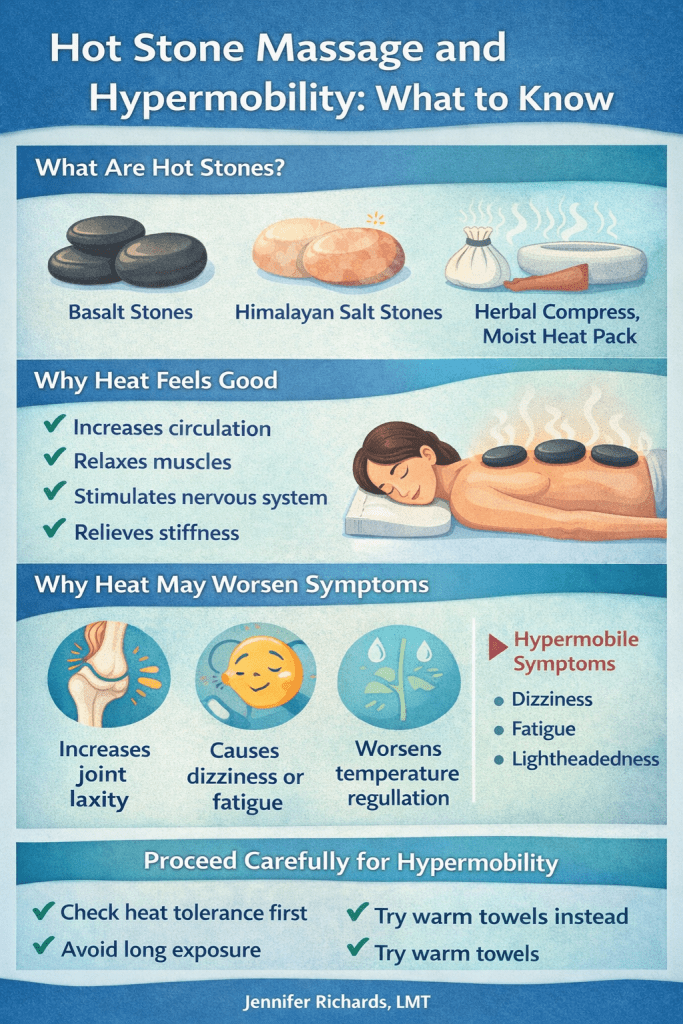
What Are Hot Stones?
Hot stone massage uses heated stones placed on the body or used during massage techniques.
The stones are usually heated in water to a controlled temperature and used either statically (placed on the body) or dynamically (gliding across muscles).
The heat helps warm muscles and soft tissue, allowing the therapist to work more easily and often with less pressure.
Types of Heated Stone Modalities
Basalt Hot Stones
The most common stones used in massage are basalt stones, which are smooth volcanic stones that retain heat well.
They are typically placed on areas such as:
• the back
• shoulders
• hands
• feet
• along the spine
The heat helps increase circulation and muscle relaxation.
Himalayan Salt Stones
Himalayan stones are carved from pink Himalayan salt crystals and warmed before use.
Therapists use them similarly to basalt stones for massage techniques. Some practitioners believe these stones may provide additional benefits such as:
• gentle exfoliation
• mineral exposure
• calming sensory stimulation
Scientific evidence for these additional benefits is limited, but many clients enjoy the experience.
Other Heated Massage Modalities
Several other warming techniques are used in bodywork.
Examples include:
Herbal compresses
Heated bundles of herbs wrapped in cloth that are pressed onto the body.
Warm bamboo tools
Heated bamboo sticks used to apply massage pressure.
Hot towels or moist heat packs
Warm compresses applied to relax tissue before treatment.
All of these techniques rely on heat to relax tissue and increase circulation.
Why Heat Therapies Can Feel Helpful
Heat therapies can be beneficial for many people because warmth helps:
• increase circulation
• relax muscles
• reduce perceived stiffness
• stimulate the parasympathetic nervous system
• improve comfort during massage
For many clients, hot stone massage creates a deeply relaxing experience.
Why Heat Can Be Problematic for Hypermobile Clients
For individuals with hypermobility, heat may sometimes worsen certain symptoms.
1. Heat may increase joint laxity
Heat causes tissues to become more extensible, meaning they stretch more easily.
While this can feel helpful for tight muscles, in hypermobile bodies it may increase joint instability, because ligaments are already more elastic.
2. Heat may worsen dysautonomia symptoms
Many people with hypermobility also experience dysautonomia, including conditions such as Postural Orthostatic Tachycardia Syndrome (POTS).
Heat can cause blood vessels to dilate, which may lead to:
• dizziness
• fatigue
• rapid heart rate
• lightheadedness
The Ehlers-Danlos Society notes that dysautonomia and orthostatic intolerance are common in hypermobile individuals.
Learn more here:
3. Heat sensitivity is common in EDS
Many individuals with EDS report difficulty regulating body temperature and increased sensitivity to heat.
The Ehlers-Danlos Society explains that autonomic dysfunction can affect the body’s ability to regulate circulation and temperature.
Because of this, prolonged heat exposure during massage may lead to discomfort or symptom flare-ups.
Massage Considerations for Hypermobile Clients
Hot stone massage is not automatically unsafe for hypermobile clients, but therapists should proceed carefully.
Helpful considerations include:
• always ask about heat tolerance
• avoid prolonged heat exposure
• monitor the client’s comfort closely
• consider using warm towels instead of hot stones
• prioritize nervous system relaxation rather than deep tissue effects
Some hypermobile clients tolerate warmth well, while others feel significantly worse with heat. Individual response is important.
Key Takeaway
Hot stone massage can be relaxing and beneficial for many people, but hypermobile bodies may respond differently to heat.
Because heat can increase tissue extensibility and affect circulation, massage therapists should carefully evaluate whether heated modalities are appropriate for clients with hypermobility or Ehlers-Danlos Syndrome.
Thoughtful communication and individualized care are essential.
Disclaimer
This article is for educational purposes only and is not intended to diagnose, treat, or replace medical care. Individuals with hypermobility, hypermobility spectrum disorders, or Ehlers-Danlos Syndrome should consult a qualified healthcare professional for diagnosis and treatment. Massage therapists should work within their professional scope of practice and collaborate with appropriate healthcare providers when supporting clients with connective tissue disorders.

 Tranquil Touch Wellness: Jennifer Richards, LMT