By Jennifer Richards, LMT 2026
What is Pelvic Congestion Syndrome?
Pelvic Congestion Syndrome (PCS) is a chronic condition caused by dilated, poorly functioning veins in the pelvis, similar to varicose veins that occur in the legs.
Normally, veins contain one-way valves that keep blood flowing upward toward the heart. When those valves weaken or fail, blood can pool in the pelvic veins, causing pressure and inflammation.
This leads to chronic pelvic pain and vascular congestion.
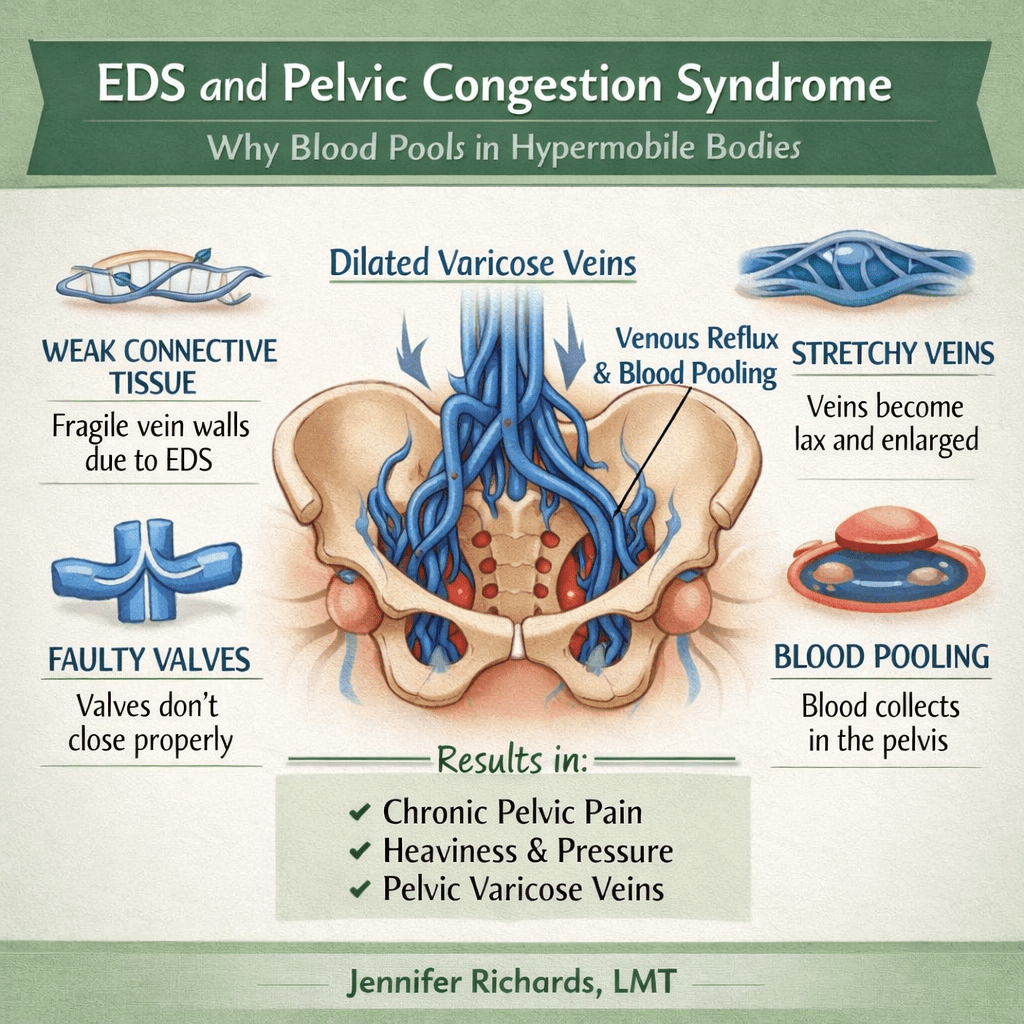
Why PCS Can Occur in People with Ehlers–Danlos Syndrome
People with Ehlers-Danlos Syndrome have weaker connective tissue, including the collagen that supports blood vessels and vein walls.
This can lead to:
• Venous laxity (veins stretch more easily)
• Valve dysfunction
• Poor vascular tone
• Blood pooling
Because the veins become overly stretchy, they may enlarge and twist, creating pelvic varicosities.
Many hypermobile patients also experience autonomic dysfunction, such as Postural Orthostatic Tachycardia Syndrome, which can worsen blood pooling in the lower body.
Common Symptoms
Symptoms often worsen after standing for long periods or at the end of the day.
Typical symptoms include:
Chronic pelvic pain
Dull, aching pain in the pelvis Pain worse after standing or sitting long periods
Pressure or heaviness
Feeling of pelvic fullness
Pain during or after intercourse
Lower back or hip pain
Visible varicose veins
Buttocks Upper thighs Vulva or vaginal area
Urinary or bowel pressure
Many people with EDS report that symptoms fluctuate with:
• Hormonal changes
• Menstrual cycle
• Pregnancy
• Long periods of upright posture
Why It Is Often Missed
PCS is frequently underdiagnosed, especially in hypermobile patients.
Reasons include:
• Symptoms overlap with endometriosis
• Symptoms resemble IBS or bladder disorders
• Pain is often dismissed as “normal pelvic pain”
Diagnosis may involve:
Pelvic ultrasound Doppler imaging MRI or CT Venography (gold standard)
Treatment Options
Treatment depends on symptom severity.
Conservative management
Often first approach:
• Compression garments
• Pelvic floor physical therapy
• Avoid prolonged standing
• Anti-inflammatory support
• Hormonal therapy in some cases
Medical procedures
If symptoms are severe:
• Pelvic vein embolization
• Sclerotherapy
• Rarely surgical vein ligation
Embolization is currently one of the most common treatments.
Massage Therapy Considerations
Because you are a massage therapist specializing in hypermobility, these points are important for your clients.
Massage can help secondary symptoms, but cannot treat the vascular problem itself.
Helpful approaches may include:
Lymphatic drainage
Supports fluid movement
Gentle abdominal work
Avoid deep pressure over pelvic veins
Myofascial release
Address compensatory muscle tension
Hip and lumbar work
Reduce referred pain patterns
Important precautions
Avoid:
• Deep abdominal pressure
• Aggressive psoas work
• Intense heat over the pelvis
• Excessive intra-abdominal pressure
Clients with PCS may also experience:
• POTS-related dizziness when standing up after massage
• Increased pelvic pressure when prone too long
Position changes should be slow and supported.
Evidence and Support
Information about vascular involvement in EDS can be found through:
• Vascular and autonomic complications documented in connective-tissue disorders
Studies show increased rates of venous insufficiency and pelvic varicosities in connective-tissue disorders due to collagen weakness.
Quick Summary
EDS can increase risk of pelvic congestion because:
• Connective tissue is weaker
• Veins stretch more easily
• Valves fail more easily
• Blood pools in the pelvis
This can lead to chronic pelvic pain, pressure, and vascular symptoms.
Disclaimer
This article is for educational purposes only and is not intended to diagnose or treat medical conditions. Individuals experiencing pelvic pain or suspected pelvic congestion syndrome should consult a qualified healthcare professional for evaluation and appropriate care. Massage therapists should practice within their scope of practice and modify techniques as needed for clients with connective tissue disorders such as Ehlers–Danlos Syndrome.


