Jennifer Richards, LMT 2026
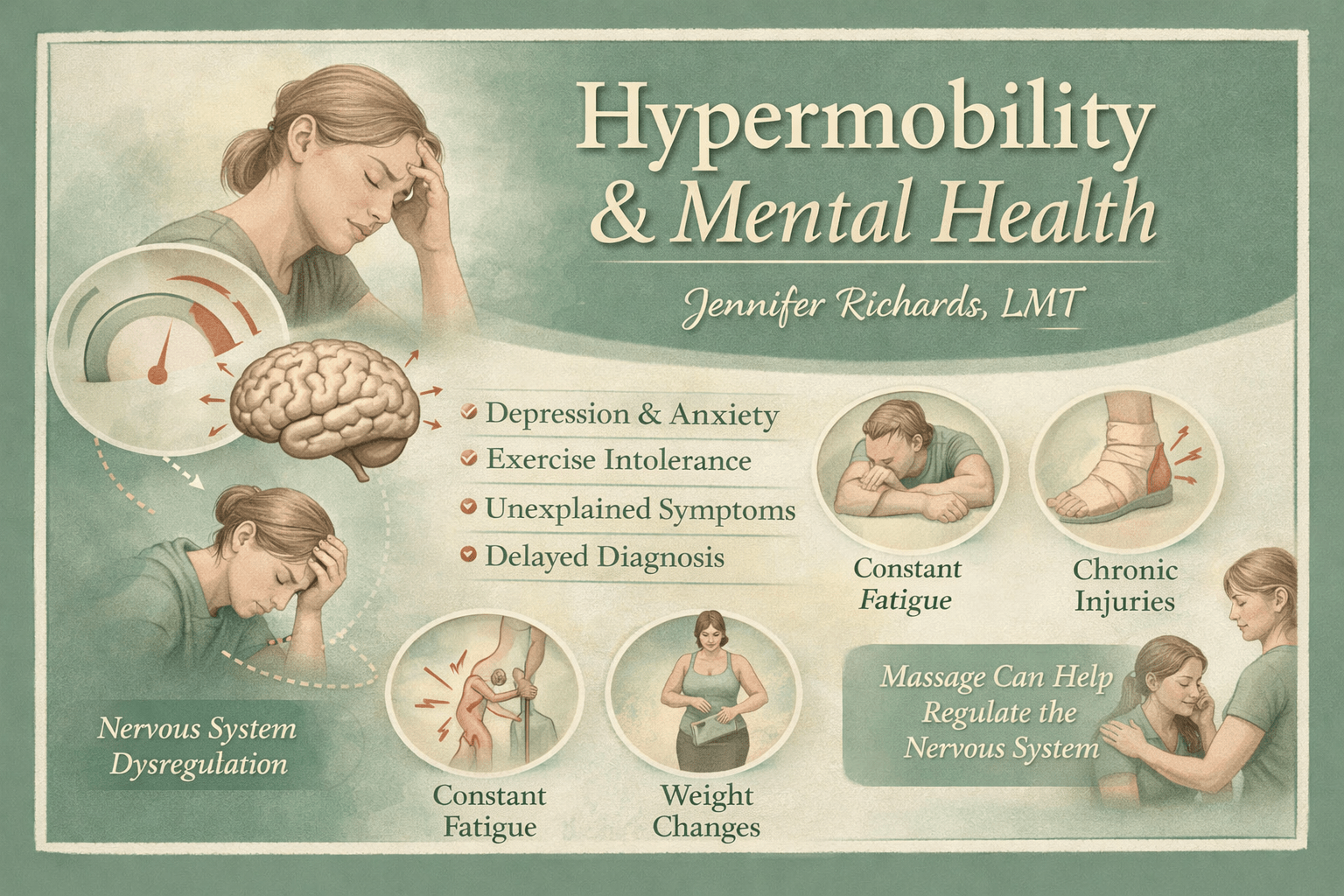
Hypermobility is commonly thought of as a musculoskeletal condition affecting joints and connective tissues. However, research increasingly shows that hypermobility—particularly in conditions such as hypermobile Ehlers-Danlos syndrome and hypermobility spectrum disorders—can also influence mental health and nervous system regulation. Many individuals with hypermobility experience higher rates of anxiety, fatigue, and depression, often related to how the body’s connective tissue interacts with the autonomic nervous system.
Why Hypermobility Can Affect Mental Health
1. The Nervous System Connection
Connective tissue is present throughout the body, including structures that support the nervous system and blood vessels. In hypermobility disorders, collagen differences can affect how these systems function.
Many hypermobile individuals experience dysregulation of the autonomic nervous system, sometimes diagnosed as Postural Orthostatic Tachycardia Syndrome (POTS) or other forms of dysautonomia.
Symptoms can include:
Rapid heart rate
Lightheadedness
Fatigue Brain fog
Temperature dysregulation
Feeling shaky or faint
These symptoms can feel very similar to hypoglycemia or panic attacks, which can trigger anxiety or cause someone to believe something is seriously wrong.
When the nervous system is constantly in a heightened stress response, the brain may interpret this as anxiety even when the trigger is physiological.
2. Chronic Fatigue and Exercise Intolerance
Many people with hypermobility report severe fatigue. Several factors may contribute:
Poor joint stability requiring constant muscular effort
Dysautonomia affecting blood circulation
Sleep disruption due to pain
Deconditioning from repeated injuries
Exercise intolerance is also common.
When activity repeatedly leads to pain, injury, or extreme fatigue, individuals may begin to avoid movement, which can worsen physical symptoms and affect mental well-being.
3. Constant Injuries and Pain
Frequent sprains, subluxations, or chronic pain can significantly affect quality of life. When injuries occur repeatedly, individuals may feel:
Frustration Isolation Loss of independence
Fear of movement
These experiences can contribute to depression and anxiety, especially when the condition has not yet been properly diagnosed.
4. The Stress of Not Knowing What Is Happening
Many people with hypermobility spend years seeking answers before receiving a diagnosis. During that time they may be told that their symptoms are psychological or exaggerated.
This uncertainty can create significant emotional stress.
Common experiences include:
Feeling dismissed by healthcare providers
Struggling to keep up with work or daily responsibilities
Gaining weight due to reduced activity or metabolic changes
Feeling misunderstood by friends or family
Once individuals understand the underlying cause of their symptoms, many report that simply having an explanation reduces anxiety.
Massage Therapy Considerations
Massage therapy can be beneficial for both the physical and nervous system aspects of hypermobility.
Support Nervous System Regulation
Hypermobile individuals often have an overactive sympathetic nervous system (fight-or-flight). Massage can help shift the body toward a parasympathetic “rest and digest” state.
Helpful approaches include:
Slow, rhythmic strokes
Gentle myofascial work
Diaphragmatic breathing during treatment
A calm, predictable treatment environment
Be Mindful of Joint Stability
Avoid techniques that may increase joint instability, such as aggressive stretching or excessive joint mobilization.
Instead:
Support joints with proper positioning
Focus on surrounding muscle balance
Work within the client’s comfort range
Address Chronic Muscle Guarding
Hypermobile clients often develop tight muscles that compensate for unstable joints. Moderate pressure and neuromuscular techniques can help relieve protective tension without destabilizing the joint.
Encourage Body Awareness
Massage therapists can help clients reconnect with their bodies in a safe way by encouraging:
proprioception awareness
pacing strategies
gentle movement between sessions
This can improve both physical and emotional resilience.
Reputable Resources
Cleveland Clinic – Ehlers-Danlos Syndrome overview
National Institutes of Health – GeneReviews on hypermobile EDS
NHS – Joint Hypermobility Syndrome
Research on the association between hypermobility and anxiety disorders:
Key Takeaway
Hypermobility affects far more than joints. Because connective tissue supports many body systems—including the nervous system—individuals may experience fatigue, anxiety, and depression related to underlying physiological mechanisms.
Understanding these connections allows healthcare providers and massage therapists to approach hypermobile clients with greater empathy, safety, and effectiveness.
Disclaimer
This article is for educational purposes only and is not intended to diagnose, treat, or replace medical care. Individuals experiencing symptoms of hypermobility, anxiety, dysautonomia, or other health concerns should consult a qualified healthcare professional. Massage therapy should be adapted to the individual needs and medical conditions of each client and performed by a licensed professional.


