By Jennifer Richards, LMT 2026
If you live with hypermobility—or work with clients who do—you’ve probably noticed that the feet tell a big part of the story.
Pain, fatigue, instability, weird pressure patterns… it often starts here.
And yet, feet are one of the most misunderstood areas in hypermobile bodies.
Let’s break it down in a way that actually makes sense—and helps you do something about it.
What’s Going On in Hypermobility?
In conditions like Ehlers-Danlos Syndrome, the connective tissue—especially ligaments—is more elastic than it should be.
That means:
Joints don’t have enough passive stability
Muscles have to work overtime
The body compensates… everywhere
👉 The foot, which should act as a stable foundation, becomes mobile but unstable.
Common Foot Patterns in Hypermobility
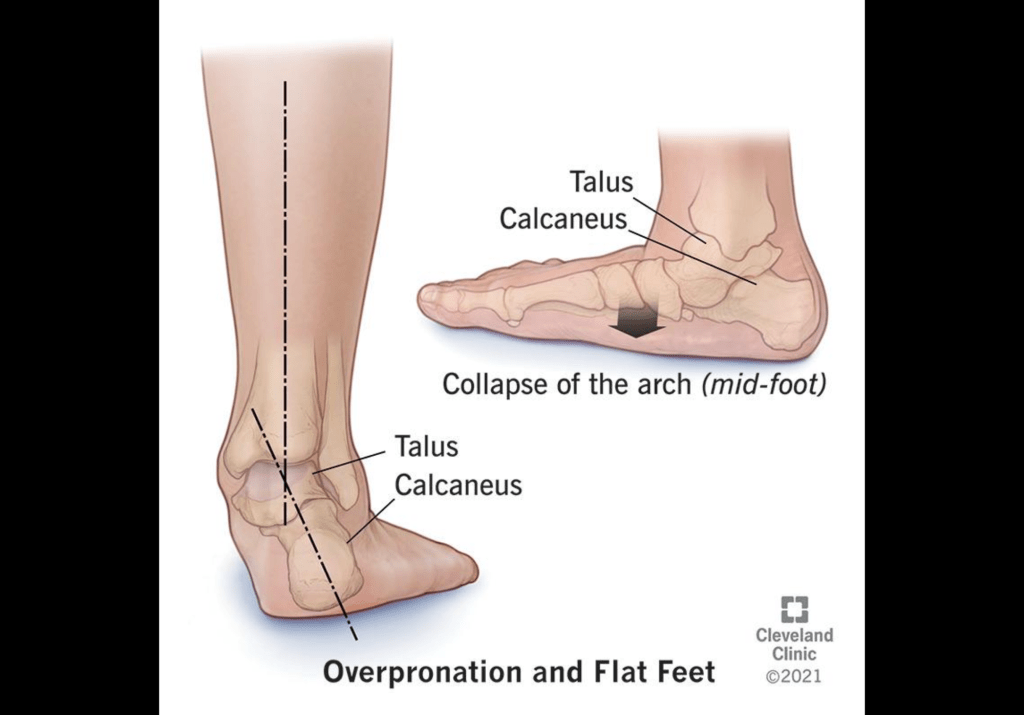
Flat Feet (Pes Planus)
This is one of the most common patterns.
What’s happening:
The arch collapses due to ligament laxity
The foot rolls inward (overpronation)
Ankles drift inward
What you may feel:
Foot fatigue
Heel or arch pain
Shin splints
Knee or hip discomfort
👉 Your muscles are trying to hold up what your ligaments can’t.
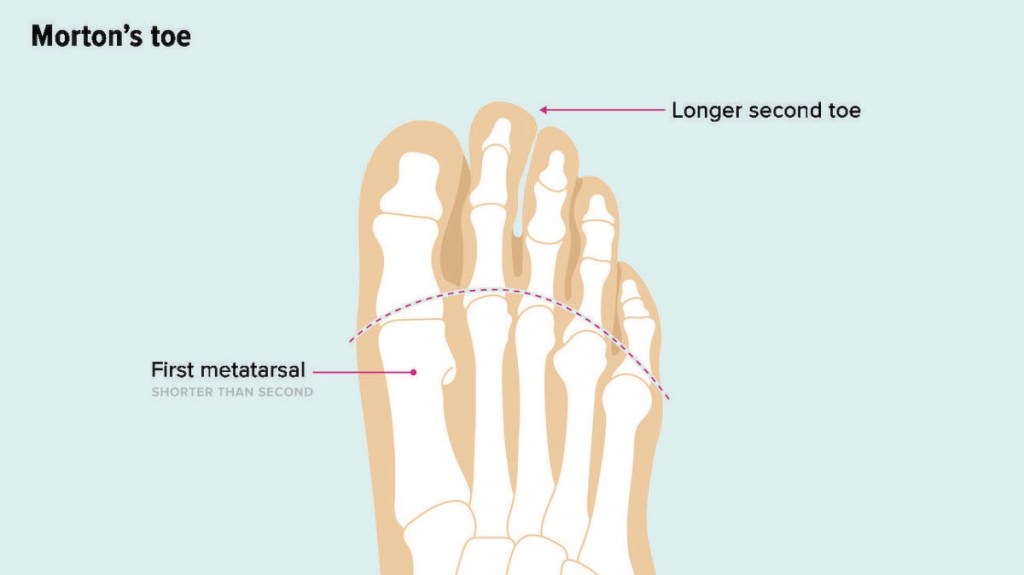
Morton’s Toe
This is when the second toe appears longer than the big toe.
Why it matters:
The big toe is supposed to stabilize push-off
With Morton’s toe, that stability shifts
Pressure moves into the second metatarsal
Common issues:
Ball-of-foot pain Calluses Less efficient walking mechanics
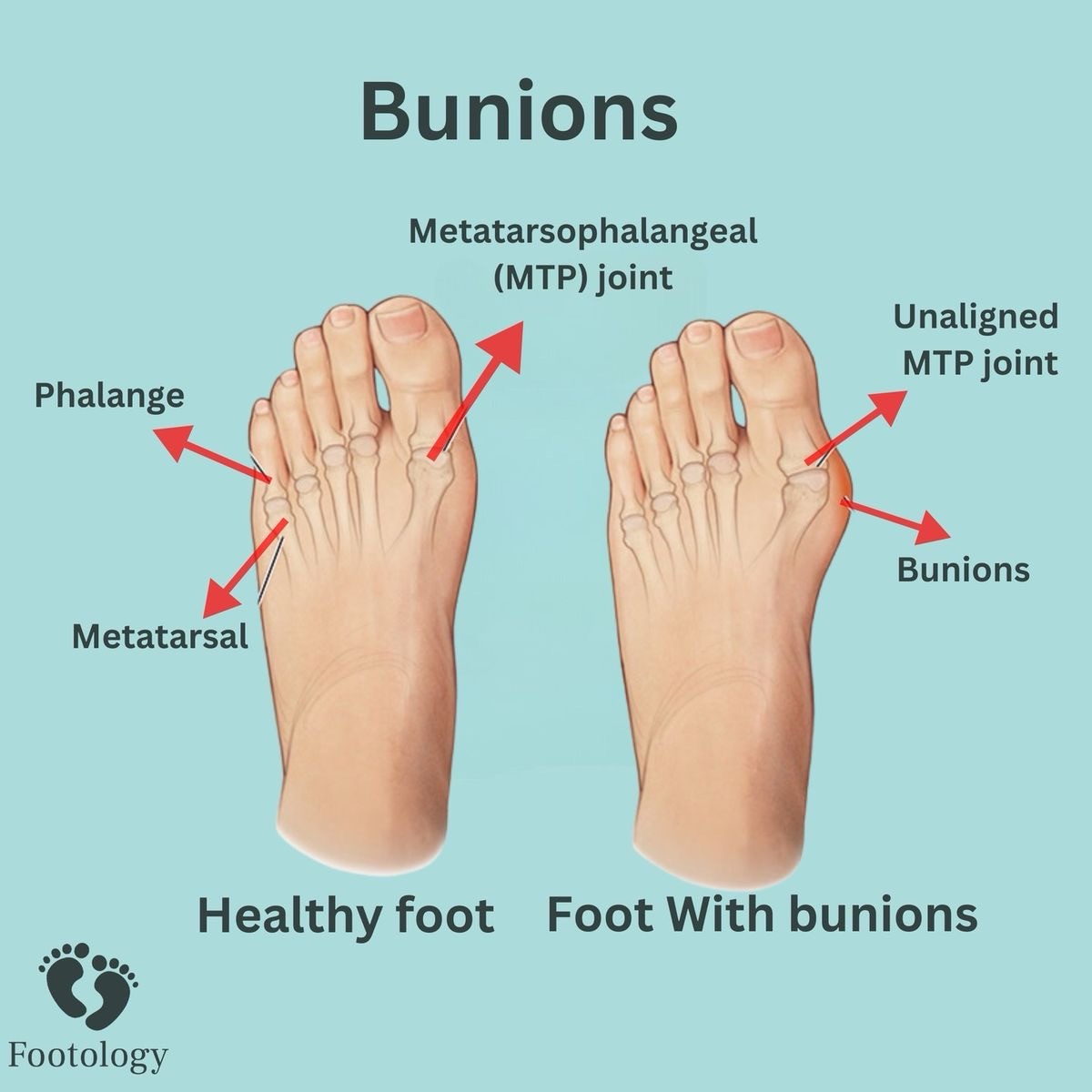
Bunions (Hallux Valgus)
What you see:
Big toe drifting inward
A prominent, sometimes painful joint
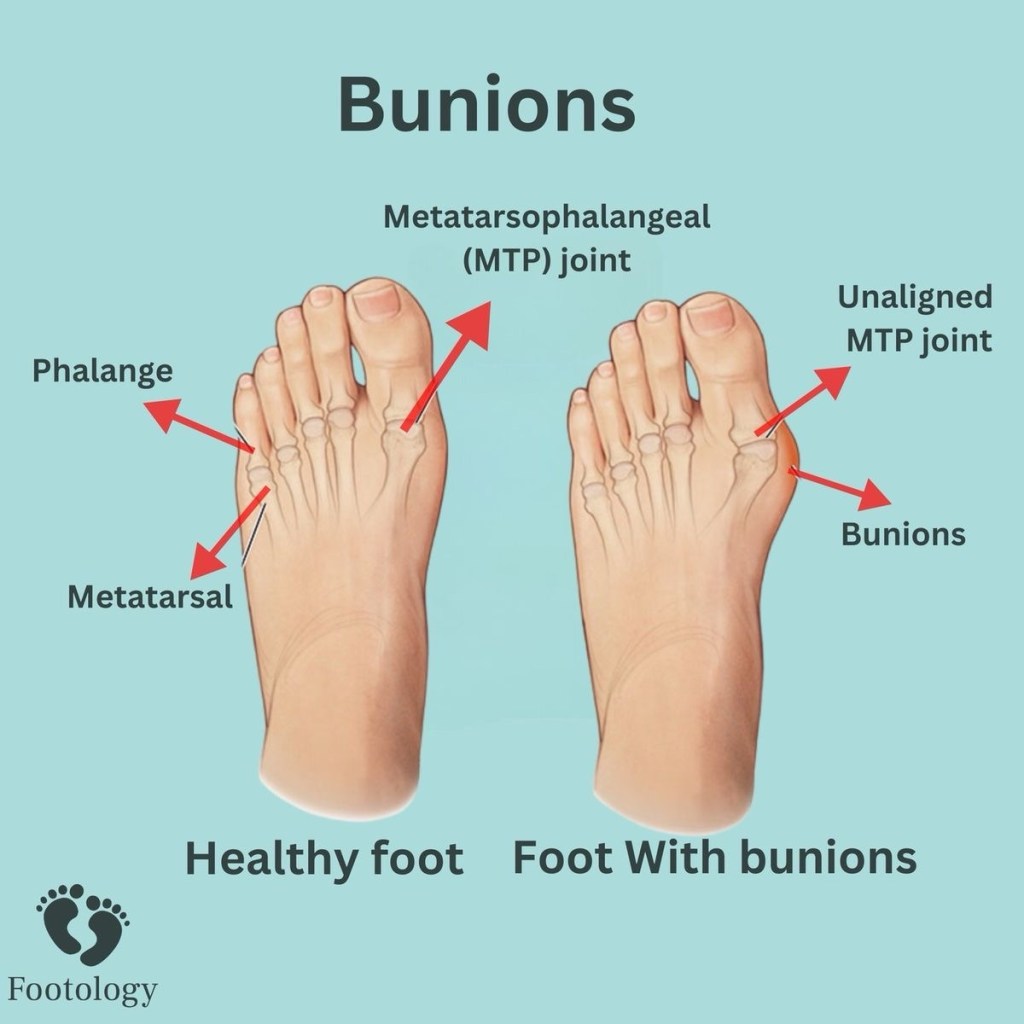
Why hypermobility contributes:
Joint instability allows bones to shift over time Muscles can’t fully counteract the pull
This is less about “bad shoes” and more about long-term instability + load patterns.
Piezogenic Papules (“Heel Bumps”)
These are small, soft bumps that appear on the heels when standing and disappear when pressure is removed.
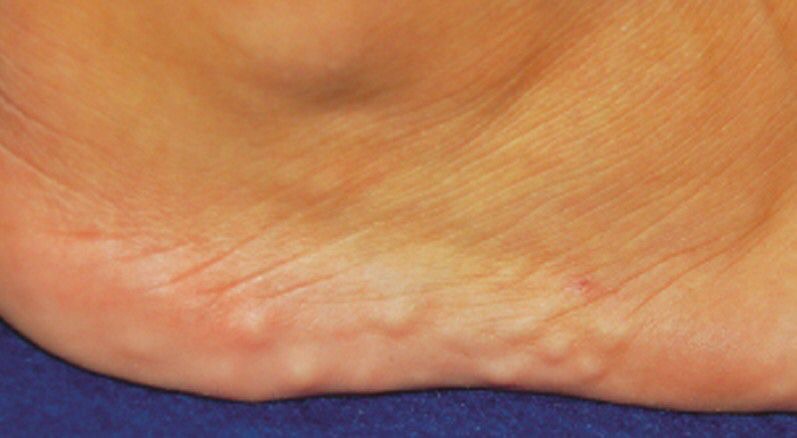
What’s happening:
Fat from the heel pad herniates through connective tissue
This is more common in hypermobile individuals due to weaker structural support
What you may notice:
Visible bumps when standing
Sometimes tenderness or aching
Often mistaken for something more serious
They’re usually harmless, but they’re a visible sign of how pressure and tissue integrity are interacting.
The Bigger Picture: It’s Not Just Your Feet
When the feet are unstable, the body adapts:
Feet → knees collapse inward
Knees → hips rotate
Hips → pelvis destabilizes
Pelvis → spine compensates
This is why foot issues often show up as:
Knee pain
Hip tightness
Low back discomfort
The feet are the foundation—and everything builds from there.
Bodywork Considerations
If you’re receiving massage—or you’re a therapist—this matters.
Helpful focus areas:
Calves (often overworking)
Plantar fascia
Peroneals and tibialis posterior
Intrinsic foot muscles
Important caution:
Avoid aggressive stretching (there’s already too much mobility)
Focus on support and neuromuscular awareness, not just release
Practical Support Strategies
Footwear matters more than you think:
Supportive, stable shoes
Arch support (custom if needed)
Avoid overly flexible, unsupportive footwear
Movement matters too:
Foot strengthening (short foot exercises)
Balance training
Proprioception work
And sometimes…
Barefoot isn’t always better—especially on hard surfaces.
Hypermobility + Foot Structure
Footcare in hypermobile Ehlers-Danlos syndrome → Explains how flat feet and altered joint mechanics are common in hypermobile individuals
Hypermobility and plantar fasciitis (Jeannie Di Bon) → Discusses how foot mechanics affect the entire kinetic chain and notes higher prevalence of flat feet in hypermobility
Many people with hypermobile Ehlers-Danlos Syndrome have altered foot structure and mechanics, often including flat or low arches.
Piezogenic Papules (Heel Bumps)
Piezogenic papules overview (DermNet) → Clear explanation of what they are and why they occur Piezogenic pedal papules (NIH / PMC) → Notes how common they are with weight-bearing
Clinical explanation of piezogenic papules → Medical definition and mechanism
Piezogenic papules are caused by fat herniating through connective tissue under pressure and are associated with connective tissue disorders like EDS.
Connective Tissue + Structural Impact
National Academies: Connective tissue disorders overview → Mentions pes planus (flat feet) in hypermobility spectrum disorders
Key takeaway:
Flat feet (pes planus) are frequently associated with hypermobility disorders.
Final Thoughts
Hypermobility in the feet isn’t just about “flat feet” or “bad posture.”
It’s about:
Stability vs mobility
Load distribution
Compensation patterns throughout the body
And once you understand that—you can start making choices that actually support your body.
Disclaimer
This content is for educational and informational purposes only and is not intended as medical advice, diagnosis, or treatment. Always consult with a qualified healthcare provider, such as a physician, podiatrist, or licensed healthcare professional, regarding any medical concerns or conditions.
Massage therapy and bodywork should be adapted to individual needs, especially for those with hypermobility or connective tissue disorders like Ehlers-Danlos Syndrome. If you experience pain, instability, or worsening symptoms, seek professional evaluation.
If this resonates with you—or you’re noticing these patterns in your own body or your clients—I’d love to hear your experience.

 Tranquil Touch Wellness: Jennifer Richards, LMT